Irish Rugby, November Internationals, Rugby, Rugby Union

Seconds Out, Round Two!

As it turns out, all Ireland needed to do was get New Zealand on neutral soil, in a city sprinkled with a little magic and, most importantly, put in an outstandingly accurate and intense performance for nigh on two hours.

Bizarrely, considering the meeting between the sides in 2013, Ireland managed to fly into Chicago somewhat under the radar. AIG had gone to typically, ludicrous American lengths to promote the game as a showcase for the ‘AIG New Zealand All Blacks’ – the stadium announcer was unintentionally hilarious  – with Ireland seemingly appearing to make up the numbers.

Now, we’ll never know how distracted New Zealand’s players were or whether they really did underestimate Ireland but the pre-match atmosphere, punctuated by the atrocious violin rendition of the almost equally atrocious, Ireland’s Call, gave no intimation of an Irish victory. It is interesting afterwards, that even amongst the burgeoning, Irish 20:20 hindsight community, few were deluded enough to claim that they had predicted a win for Rory Best’s team.

And that, thankfully, is what separates we supporters from Joe Schmidt, his management team and this ever improving, Irish squad. Offensively, Ireland got almost everything right, virtually all of it premeditated, and while there some defensive lapses, Ireland’s discipline meant the New Zealanders were afforded few opportunities to attack in broken play. As Eddie Jones succinctly pointed out that for all their abundant qualities, “the Kiwis aren’t as good off structured possession.”

And, unstructured attack is the essence to New Zealand victories, particularly in the final quarter. When Scott Barrett ploughed straight through the middle for his 63rd-minute try, even the most optimistic Irish supporter must have had visions of the standard, New Zealand late flurry and a scoreboard that might suggest a relative stroll home. However, Ireland’s defence remained both calm and confident, typified by Andrew Trimble’s rush inside that forced an awkward pass to Julian Savea’s back shoulder and Conor Murray’s nation-rousing smash of Julian Savea behind the Kiwi goal-line.
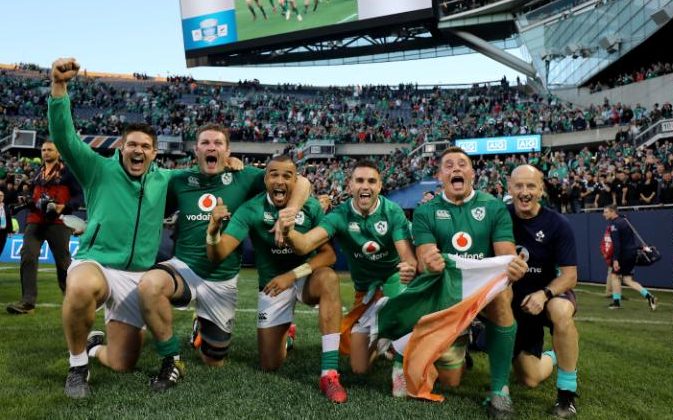
celebrations

Ireland’s, Munster contingent celebrate Ireland’s historic victory in Chicago (courtesy of the Telegraph)

Ireland did not hang on but, rather, finished emphatically with Robbie Henshaw’s try – one that just gets better with repeat viewings – so there is no sense that Ireland fluked a victory. That said, Irish people, not necessarily the Irish team, need to temper their excitement. Appearing on Off The Ball last Friday night, Brian O’ Driscoll good-naturedly observed that the Irish public really only seem to view this team in extremes after the presenters mulled over just how amazing Ireland might be. And, let’s not pretend we didn’t get caught up in that euphoria for a few days.

Meanwhile, on Second Captains Matt Williams – alumni of the same school of nonsense as Michael Owen – rambled endlessly about how important his views were while somewhat ludicrously suggesting injuries had nothing at all to do with Ireland’s World Cup exit. If you listen carefully enough, you can almost hear Williams suggest that Ireland are now playing to their true potential because Schmidt, at last, has seen the light and begun to heed the Australian’s advice. Some man, Matt!

Anyway, back to our visitors. New Zealand have never found themselves in this position before against Ireland so, as Brent Pope noted on RTE 1 Radio on Sunday, the real pressure is on Steve Hansen’s side, particularly back home where the expectations are exacting. Obviously, Ireland will be focused and determined but the longstanding, historical pressure has been alleviated after the victory in Chicago. New Zealand, having lost their undefeated record to Ireland may well feel the heat from their supporters if they lose consecutive tests to Ireland, despite only weeks ago being championed as the greatest team of all time.

After some amateur research, we figured that New Zealand’s win percentage when facing a team who has beaten them in their last encounter stands at 71 percent. Now, two weeks ago Ireland had a 0 percent success rate against New Zealand so, in relation to the largely unhelpful application of statistics to different teams through different eras, a 29 percent chance of success sounds just fine. Anyway, while we don’t know how Joe Schmidt’s mind works, one suspects he cares little for the historical response of New Zealand sides to defeat and more what they will bring to this particular contest on Saturday.

The return of the world’s best, though assuredly rusty, second-row pairing of Brodie Retallick and Sam Whitelock is a major fillip and it would be errant to think Ireland will enjoy the lineout dominance of Soldier Field. The returning duo offer the traditional skills of a lock, and in Retallick in particular, excellent ball handling skills in midfield, akin to Connacht’s 2015 star, Aly Muldowney.
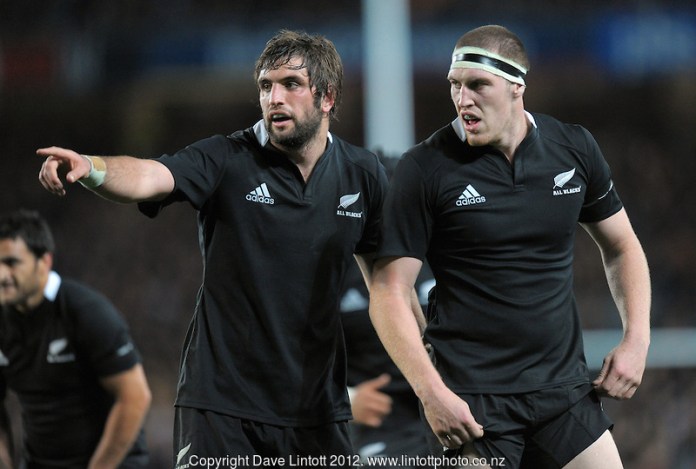
Rugby Championship - All Blacks v Australia, 25 August 2012

The returning Sam Whitelock (l) and Brodie Retallick (r) could have a decisive effect on the outcome of Saturday’s match. (courtesy of http://www.lintottphoto.co.nz)

In midfield, New Zealand are down to their last men standing, Anton Lienert-Brown and Malakai Fekitoa, which may actually prove to their advantage as this is a more balanced 12-13 combination. Ireland, however, can claim superiority in this area of the field, as Robbie Henshaw and Jared Payne have developed a superb understanding, the odd rush out of the defensive line excepted. Even during the Rugby Championship, where New Zealand enjoyed near, total dominance, the feeling was that their midfield was relatively average, particularly compared to those who had come before.

Israel Dagg’s return will strengthen the back three, particularly in the aerial battle,  but you get the feeling that if New Zealand are to win, the returns of the aforementioned second-rows and Aaron Smith’s form will have a far greater influence. Conor Murray’s outstanding performances of late have called some to label him the best nine in the world , so Smith will hope to put his toilet issues behind him and remind those watching of his sublime, pre-summer form.

To counter this, Ireland need to find new points of attack, and for this reason, it is objectively, understandable that Sean O’ Brien starts for his near unmatchable ball-carrying skills. Josh van der Flier, excellent in his 55-minute shift in Chicago, is the one to miss out but, Schmidt picks players to do a job for the team. So, outstanding as van der Flier was a fortnight ago, the head coach obviously believes O’ Brien can offer more to the team from the off. Detached and simple. While van der Flier will care little for the irony of the situation, he was the man who replaced Tommy O’ Donnell in the starting line-up against England in this year’s Six nations after the latter had performed superbly off the bench in Paris in Ireland’s previous outing.

sob

Sean O’ Brien’s return should provide explosiveness and a new point of attack. (courtesy Getty Images)

Joe Schmidt will already have drilled all the fundamentals – accuracy, intensity, discipline- into his side, so it will be very interesting to see what new plans he devises, particularly with the likely negation of the set-piece as an offensive weapon.

If Ireland are to cause serious problems for the world’s number one side then Rob Kearney will need to back up his best offensive performance in years, supplemented by another career-best outing from Simon Zebo. The same could be applied to most of the Irish side, but the reality is they will somehow need to improve upon the performance of a fortnight ago.

Oddly enough, despite winning a fortnight ago, Ireland are the ones with more questions to answer, but this comes with the territory when facing New Zealand. The visitors are close to full strength, have a score to settle in their minds and will feel they owe themselves and their coaching team a vastly improved performance. Ireland were so deservedly victors on that incredible afternoon on the south side of Chicago, but we all knew that Retallick and Whitelock’s absences presented a huge opportunity.

While we wrote about intangibles and the atmosphere in a city gone mad, clutched at straws basically, to suggest we could even get close last time, the argument for Ireland should be more compelling this weekend. Also, any suggestion that Ireland will tire in the final quarter seems moot as the entire team bar O’ Brien had last weekend off and the chances are the Tullow man may only be used for an hour. New Zealand, however, have been badly stung and they will not be complacent this time.

Still, Ireland have the opportunity to be the first side to go back-to-back against New Zealand since South Africa in 2009 and a lot of this Irish team will be facing the Kiwis in a red jersey next June. New Zealand’s players assuredly cannot imagine or allow for a scenario where they could lose three in a row to the same opponents. They should escape with a victory, but only just.

SUS Prediction: New Zealand by 6

Tips: Ireland +8  (2/1)

           Ireland to win (6/1)

New Zealand  -16 generally.

Standard
Chicago, November Internationals, Rugby, Rugby Union

Why Not Us?

So, to the biennial consideration as to whether Ireland can finally break their duck against the all-conquering world champions, New Zealand. If Ireland’s summer trips to New Zealand are greeted with trepidation and the autumn games in Dublin give us some semblance of hope, where does a first ever foray into a Chicago test leave us?

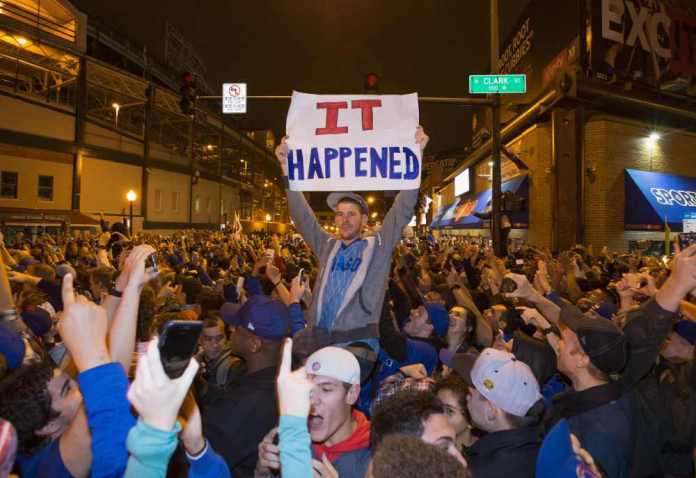
Well, for those who, like us, readily invest in fate, luck and the other intangibles, the Irish team need look no further than the north side of Chicago for inspiration. In the early hours of Thursday morning, the Chicago Cubs ended a 108 year World Series drought with the most heart-stopping, endlessly thrilling  victory over the Cleveland Indians.


AFP AFP_HQ3UC S BBO USA IL

Celebrations in Wrigleyville began in the early hours of this morning after the Chicago Cubs ended a 108 year World Series drought.


Even for those who loathe baseball, the game still involved enough twists for an entire season. The Indians, luckless since 1948, will be distraught but the atmosphere in Chicago will be absolutely electric for the coming days. And, hopefully, the Irish rugby team can feed off this. Granted, Soldier Field is on the south side in White Sox territory, but the jubilation will be felt throughout the city when the Chicago River will, apparently, run blue as the parade cascades through Wrigleyville tomorrow afternoon.


In the 108 years that the Cubs sought to break their drought, the Irish rugby team have been thwarted continuously in their own attempts to beat New Zealand. There have been near misses, never more so than 2013, nonetheless the task on Saturday remains as daunting as ever.

crotty-try

Ryan Crotty’s last-gasp try, converted by Aaron Cruden saw New Zealand defeat Ireland in 2013 in heartbreaking circumstances.

It’s very difficult to explore any narrative that hasn’t already been advanced going into this game as the New Zealand juggernaut has eventually rolled over every team it faced this summer. That’s not to say every encounter in the Rugby Championship was a completely, one-sided affair – Argentina, in particular, offered considerable food for thought – but each contest ended with a bench inspired, New Zealand onslaught.

Using your substitutes to up the intensity and energy is hardly an abstract concept – Kilkenny and more recently Dublin have perfected the art – but when New Zealand’s starting fifteen have been testing their opposite numbers lungs for 60 minutes, the ploy becomes devastatingly effective. Indeed, in an interview earlier this week, Lions coach and world-class troll, Warren Gatland noted that the results from the GPS tracker used on New Zealand evidence the claim that their players simply cover more ground than their opponents.

The brain is inclined to slow down as the body does and this is when New Zealand pounce. When allying this mobility with their redoubtable ball handling skills, awareness of space and acuity of decision making, this particular edition of New Zealand becomes increasingly difficult to plan for. Gordon Darcy’s article in Wednesday’s Irish Times expertly highlighted the way Irishmen began making poor decisions in the final three minutes in the 2013 encounter as a result of being out on their feet.

Everybody presumed that the collective retirements from New Zealand rugby of Dan Carter, Richie McCaw, Ma’a Nonu and Conrad Smith would create a contest at the top but in 2016 Steve Hansen’s side appear to have moved up to a new level of ruthless efficiency and precision.

And, perhaps to the fore of this team’s successes is its ability to ensure the machine keeps evolving to the point that when the above-named quartet retired, their importance to the team had possibly been surpassed by the Smiths, Ben and Aaron and Kieran Read. The best teams, the ones that seem to move on effortlessly and without fuss always have one eye on the future.

So, what chance do Ireland have on Saturday? They’re shorn of serious ballast in Sean O’ Brien, Iain Henderson and Peter O’ Mahony, the latter of whose exclusion seems slightly perplexing in light of his recent performances. Still, Joe Schmidt sees these players every day and with three tests to follow, the head coach can’t simply throw caution to the wind and still potentially end up on the end of a pummelling and without key players.

Ireland’s performance in South Africa this summer were extremely encouraging, particularly in the first test when they played 20 minutes with just thirteen men on the field. A series victory was denied by some basic individual errors and, for want of better analysis, a lack of good fortune.

Granted New Zealand gutted South Africa last month, but South Africa have actually regressed since June, played putridly on the day and allowed New Zealand dictate the game as they pleased. To brush over New Zealand’s performance would, of course, be careless at best as they were absolutely sublime in every aspect of performance and they exhibited what awaits Ireland if performance levels, or heads, drop in Soldier Field.

Ireland, having never played New Zealand in Soldier Field are, of course, undefeated there so there’s also that desperate crumb of comfort to cling to. However, on the face of what’s gone before and the current standings of the sides, does Rory Best’s team have a realistic chance of victory? Unfortunately, the honest and pragmatic answer would appear to be, no. However, let’s try and scratch a little deeper.

It seems that New Zealand’s vaunted second-row pairing of Sam Whitelock and Brodie Retallick will both be missing so this somewhat softens the blow of the absence of Henderson, O’ Mahony and O’ Brien. You can argue that New Zealand will be running out of steam after a long, test summer but, surely, having games under your belt is superior to a handful of training field sessions since late June. But after that, it’s hard to find an objective viewpoint to favour Ireland.

pom-and-ih

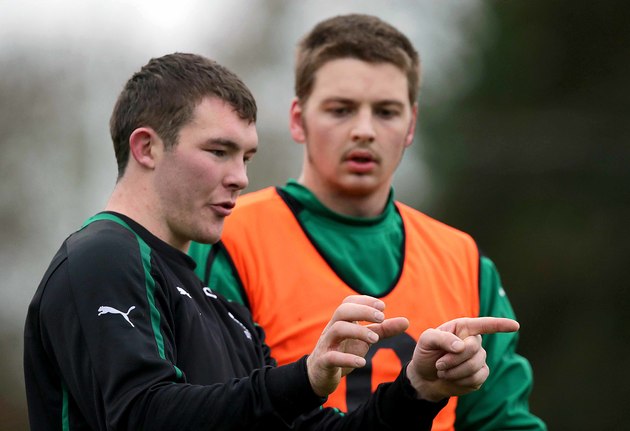
Ireland will really feel the absence of Peter O’ Mahony (l) and Iain Henderson (r) and Sean O’Brien in Soldier Field.

New Zealand are superior at every position on the pitch, bar perhaps first centre and the second row, and while scarcely believable, the sum is actually better than the parts. That cliché is usually reserved for a team like Leicester City’s premier league winners or Connacht’s reigning Pro 12 champions, a collection of ‘characters’, journeymen and enigmas patched together and proving their worth to all the doubters. But, it also rings true for New Zealand. Their centre pairing does not jump off the page, nor will the second-row pair – Jerome Kaino could yet excel in this role- and yet as the game unfolds it seems as if the fifteen individuals are performing as one, almost preternaturally in sync.

While it may seem dismissive of Irish supporters to expect defeat on Saturday, this attitude is more as a result of New Zealand’s grim stranglehold over the game for the past two years. Ireland have a chance, of course they do, but it will take a bit of adventure and guile to really get at New Zealand and it appears that Joe Schmidt, through a combination of necessity and choice, will be reverting to a more pragmatic game.

Ireland will need to perform at somewhere close to perfection in terms of accuracy, decision-making and defensive intensity while relying on every bit of luck to go their way. In this era of painful over-analysis, those obsessed with statistic evaluation hate to acknowledge that fortune, or lack thereof, can have a massive impact on the outcome of a game. For all their qualities, the unexpected rain shower last night may have been the decisive factor in the Chicago Cubs’ historic victory.


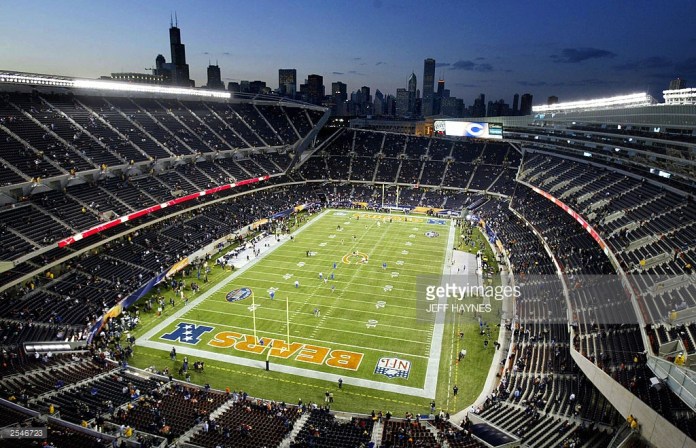
soldier-field

Soldier Field, on the banks of Lake Michigan and home to the Chicago Bears will play the unusual home to an Irish rugby fixture.


Nonetheless, it would require a borderline, delusional optimist to go into Saturday’s encounter expecting an Irish victory. And yet, here we are in the city where one of sport’s longest, most famous droughts was just ended. Look, we’ve never beaten  New Zealand anywhere so it’s not like we’re out of our comfort zone. Still, it would be remiss of us to look past anything other than a New Zealand victory. And yet………

New Zealand by 8


Standard
Rugby Union, Six Nations, Six Nations 2016

Six Nations 2016 – Round 2 Preview

The idea of a good draw has never really crept into the thinking of rugby players or coaches. It’s not like soccer where a side can set up away from home to win a valuable point on the road.

Obviously, the sheer volume of scoring makes it impossible to plan for the draw and, barring a last minute equalising score, you’re never going to be overjoyed with one. And, indeed, such is the impatience of the U.S. sporting audience that they simply did away with draws.

Last Sunday, for the third time in five seasons, Ireland drew a game in the Six Nations. And, while Rory Best’s side will rue letting a 13-0 lead slip away, they can be content in the fact that they performed beyond many expectations while also salvaging a game which appeared to be slipping away from them.

The ferocious intensity of the first half was bound to diminish and the Welsh, as one would expect, improved as the game went on. The Irish coaching staff and players could never be seen to revel in a draw but there were considerable positives to be gleaned from the game.

The fear from such an attritional game is whether Ireland will be able to replenish their stocks adequately with a mere six-day turnaround but the fact they have no choice makes their decision easier.

France next and the home side, while certainly not waiting in the long grass, will be keen to build on their ability to tough out a largely undeserved victory over a beleaguered Italian side.

CJ Stander excelled on debut, so too Tommy O’ Donnell on his injury-shortened return, while Jamie Heaslip complemented what was a terrific back row effort.

Jack McGrath’s extraordinary effort meant Cian Healy’s loss was not felt all that keenly and while the latter is still probably first choice when fit, the gap has narrowed.

The general back line play was vastly improved and this came about in large part due to the renewed efforts of Conor Murray and Johnny Sexton. Murray’s growing sense of responsibility is a massive bonus while Sexton’s vigour in attack will be crucial in ensuring Ireland’s offence continues to flourish.

Both wingers were superb, particularly in defence, but Keith Earls head trauma will keep him out from the French encounter.

Meanwhile, there is the Simon Zebo enigma. Careless in his basic duties and lacking conviction in the air, the Corkman brought a deep strike threat to the line that has been missing for so long from the Irish game. Zebo too is ruled out tomorrow – though misleading information during the week suggested that both he and Earls were fit – but one wonders if he would have been considered in any event.

Liam Toland makes a very pertinent point in today’s Irish Times about the impatient attitude shown by the crowd in the Aviva Stadium last Sunday afternoon. Irish rugby fans have kicked and screamed for a more expansive, attacking threat and last week Zebo provided glimpses of this. We’ve already touched on his weaknesses but his offensive ability is innate and must be encouraged. 

Schmidt has already shown that he can prepare a team that is extremely reliable and steady. People complained about his selection and approach. So, Schmidt tried out Zebo who, rather unsurprisingly, mixed the good and the bad. So, for those difficult to please supporters, the Irish side reverts to type tomorrow, mostly as a bye product of injury.

France -v- Ireland, 13th February 2016, Stade de France, 2:25 p.m.

TV schedulers continue to push the boat out with this year’s effort to compile the most difficult to remember kick-off times ever.

It’s quite difficult to read into Guy Noves first match as French coach last weekend. While France showed considerable resolve in overturning an eight point second-half deficit, you have to remember that they shouldn’t have gotten into such a whole at home to Italy.

Very few gave Italy so much as a sniff of victory but the Azzurri were extremely combative and their back line showed more structure and intent than recent years. Still, France clawed their way back in, admittedly with a dime from JP Doyle and Sergio Parisse’s ill-fated decision to attempt a drop-goal at the death.

So, where does that leave France? Conventional wisdom suggests that the French are better off for toughing it out but with a seven-day turnaround but with a new coach and the ‘what have you done for me lately’ Parisian crowd, surely a resounding victory would have been preferable. Particularly when French sides have traditionally fed off their bristling self-confidence.

In any event, Noves has decided to reshuffle a deck that ha already been shuffled last week. A sign that he doesn’t like the cards at his disposal or simply a desire to see what options he has? The latter would not be a bad idea given the short rest period but very little can be said with certainty about this French side.

Noves had no say, however, on the absence of Louis Licamoles and centre, Gael Fickou. Picamoles, one of the finest forwards in world rugby is gone for the tournament and, while his replacement Yacouba Camara is highly rated, its akin to trying to replace the Limerick man who-shall-not-be-named.

Curiously, Rabah Slimani, lauded so much by journalist and pundits drops to the bench to be replaced by the gigantic, Uini Atonio. If Slimani is the superior and fitter player, then surely he should start with the 145kg Atonio introduced late on to cause devastation in set-piece and open play alike. Bringing the big men on to raise hell in the past quarter has always been the tried and tested method.

Rabah

Those in the know say Rabah Slimani is a world-class, prop. So, France have dropped him.

Nonetheless, Ireland and particularly Nathan White suffered at scrum-time last weekend and if the French get on top in this department, and Jaco Peyper gets swayed by the baying Parisian crowd, Ireland could be in for a torrid time. 

As we’ve already mentioned, Joe Schmidt’s hand has been forced by injuries in the back three. Reports suggested that both Earls and Zebo were cleared to play but is is apparent now that neither man is available for selection. The situation is particularly unclear with Earls as our understanding is that once a player passes the return to play protocols, he can return to play. It would be heartening to think that further medical advice was sought in this regard, thus leading to Earls omission.

Both Kearney brothers return, bringing stability and steadfast application if not attacking threat but the big boost comes up front. Sean O’ Brien – perhaps Ireland’s new totem – returns from injury to form a formidable back row with Jamie Heaslip and last week’s hugely impressive debutant, CJ Stander.

Tommy O’ Donnell did little wrong last week prior to leaving the field and absolutely merits his place in the 23 but, O’ Brien when fit, is a certain starter. Gerry Thornley rightly pointed out during the week that Stander and O’Brien’s sharing of the tight carries should open some space for Heaslip to carry as he once did. Obviously, back rows are all about balance so we shouldn’t presume but, in theory, this unit should be formidable.

SOB

Sean O’ Brien’s return is guaranteed to strengthen the Irish pack.

Conor Murray and Johnny Sexton may be forced to revert to the style of Six Nations past but, it would be tremendous to see the attacking endeavour of last weekend once more. The forecast is not great for Paris but both Irish half backs handled wonderfully in postcard Irish weather in Dublin. Personnel and coaching directions, rather than weather, may force their hand.

Robbie Henshaw and Jared Payne appeared to entrenched in Ireland’s midfield and they’ve done absolutely nothing wrong but still one wonders if the Connacht man’s attacking threat is being nullified somewhat. Not to mentions Payne’s.

Pragmatism does however have to enter the conversation and given Ireland’s next destination – Twickenham with the chariot getting into gear – a victory is vital tomorrow.

Noves’ France did not nothing to startle last weekend, though Virimi Vikitawa lit the game up at times, and their turnover count, 19, was massive. If Ireland exploit this French weakness and find a much improved effort in the scrum – a big ask, admittedly – then there is no reason to fear this French side.

Ireland have not lost in Paris for six years, unthinkable only a decade ago, and the seven point handicap- of-fear is long since gone. While this is not the turgid Philippe Saint Andre edition of France, Les Bleus still have a considerable transition period ahead.

Tomorrow, Ireland’s known knowns should overcome the unknown unknowns of this French side.

Ireland by 3

In Brief…….

Wales -v- Scotland, 13th February 2016, Millennium Stadium, 16:50

Both sides will have spent last weekend mulling over what could have been, but Wales are clearly the better side. They finished strongly in Dublin and had to contend with the loss of Dan Biggar from very early in the game.

Biggar starts, which is either the result of incredible healing powers, an over exaggeration of the injury in the first instance or a terribly poor judgment call.

DB

Dan Biggar: Ankles of adamantium

Meanwhile, the Scots travel south in search of a first victory in Cardiff since 2002. Vern Cotter was frustrated with his sides lack of composure in attack last week and Scotland know that defeat tomorrow sends them into a place they’ve endeavoured to escape for so long: the battle for the wooden spoon. 

The roof is set to be closed in this incredible stadium and both sides will come to play. The Scots know this is all or nothing, even at this early stage while the home side dare not disappoint a bullish, expectant Cardiff crowd.

Expect plenty of attacking rugby but the difference may be in red zone efficiency. Scotland promise far more than they deliver. This is rarely the case for Wales in Cardiff.

Wales by 10

Italy -v- England, 14th February 2016, Stadio Olimpico, 2:00 pm

Eddie Jones had to be impressed with his side’s efficient, just get-the-job-done victory in Murrayfield last weekend. Their defence was rock solid, while the build up to Jack Nowell’s try showed glimpses of attacking intent, which to be fair, was also present under Stuart Lancaster.

Italy, so cruelly denied in Paris last week, are at a crossroads. Either they have dropped their heads and questioned the relentless cruelty of sport, or they’ve decided that England under new leadership are there for the glorious taking.

Recent performances suggest Italy really are improving and England may not have it all their own way on Sunday. Nonetheless, England are the better side and Eddie Jones will have his charges prepared for a breakneck, passionate Italian performance.

Maro

English rugby fans are getting very excited about Saracens 21-year-old second row, Maro Itoje.

Watch out for England debutant Maro Itoje off the bench. The Saracens second-row is being mentioned already as one of those once-in-a-generation players, which while ludicrous is also intriguing.

England by 12

SUS Picks – Ireland to beat France – Evens

                       Scotland +10 draw with Wales  22/1

                        Italy +15 over England 10/11

Standard
Rugby Union, Six Nations

Six Nations 2016: Ireland v Wales Preview

So, the gloom has lifted. Or, at least, dissipated a little. That crushing defeat in Cardiff really took the sails out of a nation that had gotten a little too high on self-belief and perceived squad-depth.

In any event, the World Cup should be left to one side for now and our attention turn back to the Six Nations, a fantastic standalone tournament in its own right. Any rationalist could have told you before the World Cup that he quality of rugby in the south is superior. The World Cup simply confirmed this so, time to move on, hopefully with lessons learned.

Irish rugby has been less than ebullient since October, with Paul O’ Connell departed for Toulon, key players out injured and disastrous European campaigns for Leinster and Munster. Still, while we can bemoan the financial death grip that the English and French have taken on the club game, the Six Nations offers a far more even playing field. Yesterday’s game in Paris is testament to to this.

Ireland go into today’s opener with designs on a first ever tournament hat-trick but it will take at least two huge performances to lift them past a settled, superior Welsh side and an England team buoyed by both the Eddie Jones-effect and a favourable schedule.

France would have expected a natural lift with the arrival of the mastermind of the Toulouse golden-era, Guy Noves but yesterday provided a stark reminder that the French have some distance to go before they are serious contenders once more. Indeed, had in not been for a hometown call by referee, JP Doyle, Noves would have been enduring a tough Sunday in the French papers.

Along with many others, we would have been borderline dismissive of Italy but their effort yesterday game marked a continued improvement in the Azzurri’s recent performances, if not results.

Neither Scotland nor England gave much away yesterday and Eddie Jones will most likely be delighted to have picked up a maiden victory in a tricky fixture. Scotland huffed and puffed but rarely looked like blowing the door down, or even getting a peek in through it.

So, to Dublin on this afterenoon where Ireland face into Warren Gatland’s largely replenished Welsh side.

Ireland -v- Wales – Aviva Stadium, 7th February 2016, 15:00

The Rory Best era gets under way in the most trying of circumstances this afternoon. Deprived by injury of seven probable starters, Best faces a scenario not unlike that one faced by today’s opponents, Wales, in the Rugby World Cup.

Rory Best

New Ireland captain, Rory Best, knows that his side will have it all to do today.

The endgame of Wales’ phenomenal victory over England in September was preceded by an almost macabre set of events as an already depleted side was shorn of Liam Williams, Scott Williams and Hallam Amos, two of whom were injury replacements themselves. Ultimately, their winning try was set up by replacement winger Lloyd Williams, a scrum half in his injury crisis-free, day job.

While Wales were ultimately battered into submission by a bigger, stronger South African side, it is worth remembering that Fourie Du Preez’s winning try came about as the result of a glorious flick from Duane Vermeulen. Right at the death.

While their supplies were radically diminished by mid-October, the Welsh jigsaw has almost been put back together and they face into a fixture that has held little fear for them in recent times. True, Ireland rolled over Wales two years ago but, absences both short-term and permanent from the pack mean the visitors have the unquestioned upper hand up front.

Warren Gatland has as ever engaged in his doublespeak, citing Jerome Garces scrum officiating as the reason for benching Gethin Jenkins while simultaneously describing the Frenchman as one of the best referees in the world. Gatland knows that Ireland have struggled with Garces’ interpretations in the past but you’d often wonder if the New Zealander would be better  off saying nothing.

It is the Welsh engine room and backrow which holds the trump cards, however. Alun-Wyn Jones is now the preeminent second-row in Europe, while Gatland has finally plumped for the triumvirate of Justin Tipuric, Sam Warburton and Taulupe Faletau. This highly touted though largely untried combination could potentially wreak havoc, and Ireland, already down the influential Peter O’ Mahony and Sean O’ Brien will need huge performances from a fairly subdued-of-late Jamie Heaslip, CJ Stander and Tommy O’ Donnell. Incidentally, O’ Donnell’s return is one of the few bright spots in Irish rugby of late after that horrific injury in Wales last August.

Welsh Backrow

The back row that many Welsh fans long for, Justin Tipuric, Sam Warburton (c) and Taulupe Faletau could cause major damage today.

CJ Stander has been outstanding for Munster over the last season and a half but today will be comfortably the biggest challenge of his career thus far. Today’s performance will be a considerable measure of the man and while there would be no shame in being bested by the Welsh unit, a dominant performance from the South African native would lay down a claim for a starting spot even after the injuries clear up.

Things are muddied somewhat at half back. Conor Murray and Jonathon Sexton on song are superior to the tandem of Gareth Davies and Dan Biggar but the Welsh pair were far the better performers in the World Cup. That said, none of the four bring particularly good form into Sunday’s game and the major question remains as to whether Sexton can regain the form of early 2015.

Further, Joe Schmidt’s decision to send Paddy Jackson back to Ulster for the weekend must have many people scratching their heads. The twenty-four-year old is unquestionably the form Irish out-half this season and, while no one is suggesting that he takes Johnny Sexton’s place on the field, his release seems counter-intuitive to any intimation that form would be rewarded

This is probably the first time since Sexton took possession of the Irish ten jumper that concerted criticism has been levelled at him. That is not to say that his place is remotely in question but memories fade and Paddy Jackson is now a legitimate option for Joe Schmidt. Sexton more than ever, needs to put in one of those performances that stamps his authority all over the game.

The injury to Rob Kearney has thrown up an interesting conundrum. Joe Schmidt could have made a like for like replacement and moved Jared Payne to fullback. In turn Robbie Henshaw could move to his more natural outside channel allowing Stuart McCloskey to debut at inside centre.

Schmidt craves stability though and has thus opted for Simon Zebo, a winger, at fullback. Presumably, McCloskey can’t be trusted in that channel against Jamie Roberts and to be fair, you can somewhat see where Schmidt is coming from in terms of desiring familiarity. However, cast your mind back to November 2014 and you will recall an untried pairing of Jared Payne and Robbie Henshaw putting in a blinding defensive performance to thwart South Africa.

McCloskey is an inside centre, he’s playing out of skin and he would allow Payne to roam as a second playmaker. And, we saw how little purchase the Payne-Henshaw combination got in Cardiff last March. We could yet be proven wrong but, it feels like the right time to put McCloskey into the fray. Otherwise, what? Let him dip his toes in Paris next weekend? Or the welcoming environs of South Africa in June?

JP

There have been calls to move Jared Payne to his preferred full back role, but he remains at outside center today.

Irish rugby is shrouded in an exaggerated cloak of gloom at present. Yes, the Champions Cup campaigns were pretty disastrous but the nucleus of a strong international side remains and, in any event, the national team comes first, now more than ever. And, our visitors have proven that a strong national side should not necessarily rely on domestic sides thriving in Europe.

With regard to those calls for an expansive game, bear in mind that it’s due to rain this afternoon and this is February, not the most conducive month to free-flowing rugby. So, don’t expect an entirely new model. Today may prove a bridge too far given the number of notable absentees but a high-tempo performance and a remove from the much-maligned passive defensive system would represent a good start to the season.

Still, Wales have the stronger fifteen and the stronger bench and home advantage means little in this particular fixture. We can’t fight logic on this one.

Wales by 3

Standard
#Boxing, Boxing, Football, Gaelic Games, Golf, Horse Racing, NFL/Rugby, Republic of Ireland/FIFA, Rugby Union, Soccer, UFC

Straight Up Sport Predictions 2016

2015 was, by any comparable standards, an excellent sporting year. In the murky world of sporting politics, there was also the welcome downfall of FIFA kingpin Sepp Blatter and the lurking snake Michel Platini. Meanwhile, we were treated to the rather unsurprising revelations that Russian athletics was involved in systematic doping and Lord Sebastian Coe is a bit of a dick.

The highlights included the New England Patriots winning their fourth Superbowl after a botched play call by Seattle Seahawks on the New England one-yard line. Almost one year later none of Pete Carroll, Darrell Blevins, Russell Wilson or the latter’s usual play-caller, God, have been willing to take responsibility for not giving the ball to this man (this clip comes with a Tipper Gore warning!)

Willie Mullins dominated Cheltenham and but for this fateful fall – horse and jockey will be back with a vengeance in 2016 – the punters, for once, would have had the bookies running for cover.

Ireland secured back-to-back Six Nations championships for the first time ever after the most dramatic day in tournament history, though the year ended on a diminuendo after an injury-depleted side, with the wrong man at out-half, fell to an inspired Argentina.

Meanwhile, Andy Lee dropped his WBO middleweight title in mildly controversial circumstances to Billy Joe Saunders. It was terribly disappointing that the champion did not get an opportunity to make either of his first two defences on Irish soil. Had Lee fought Saunders in Limerick the likelihood is that he would have retained his title, as boxing historically favours a hometown champion in a tight fight.

Carl Frampton twice retained his IBF super-bantamweight championship, while it would be remiss of us not to mention Conor McGregor’s stunning knockout of Jose Aldo in Las Vegas last month.

Whether you care to admit it or not, the country’s greatest success in 2015 was the qualification for Euro 2016. After the 1-1 draw at home to Scotland in June, dreams of a French summer lay in tatters. We remember agreeing as much with a few friends in a Cambridge pub on that dank afternoon.

But, then, along came Shane Long, Irish folk-hero Jon Walters and a few dollops of luck and qualification was realised after a relatively straightforward dispatching of Bosnia. A group comprising Belgium, Italy and Sweden looks ominous but that is June’s problem.

So, to 2016 and a combination of a few of our hopes and predictions for the sporting year ahead.

  1. After much humming and hawing, Manchester United finally rid themselves of Louis van Gaal.

There can’t be a Manchester United fan out there who will miss the dull, turgid aimless crap that has cost the Dutchman £250 million to manufacture. Rumour has it that Ryan Giggs has been in cahoots with Petyr ‘Littlefinger’ Baelish to launch a coup, though, at this point, it seems another despot, Jose Mourinho, will take the reins of this great club. All the while, Sir Matt Busby turns in his grave.


LVG

The end is nigh for Louis van Gaal.  (Courtesy of Getty Images)


  1. Thanks to the incompetence of others, Arsenal win the Premier League and Arsene Wenger claims that he has been vindicated in investing in a series of shite strikers.

Arsenal definitely have previous when it comes to choking in the second half of the season but at present they appear to be the most error-free side, which by extension makes them the most likely to win the league.

Wenger, to his credit, has been arguably the second best manager of the Premier League era but his sometimes delusional stubbornness has cost the team in the past. Yes, the board love him because the club is in the black but, let’s be honest, the fans couldn’t give a shit about that. They want to win the Premier League.

If Arsenal don’t win this year’s league, then they could be facing a very lengthy drought. There would be a sense of irony as well as a perfect example of the farcical treatment of modern day managers if Manchester City regained the title before coldly sacking Manuel Pellegrini. However, we can see Arsenal just about falling over the line though North London rivals, Spurs, will pose a serious threat.

  1. People accept that Irish club rugby had a great run, stop whining and focus on the international team.

The media of late have been lamenting the death of Irish rugby mainly due to the fact that the French and English look set to dominate the European game for the foreseeable future. Now, first of all, let’s accept that the provinces have seen their fair share of benefactors down the years while the Pro 12 was in an advantageous position regarding qualification to the old Heineken Cup.

We’re definitely not apologists for the European Champions Cup – for one thing, the BT Sport coverage is stomach-churningly ‘old-boy’ and elitist –  and the chips are quite clearly stacked in favour of the shaky Anglo-French alliance. However, like many before them, the Irish provinces have been punching above their weight for years. And, rather than whinge, let’s celebrate this fact.

Many of our finest rugby journalists have gotten in a tizzy of late over the potential downfall of the national side given the perilous state of Irish sides in Europe.

Well, we give you Example A, Wales. Bar the odd good season for Ospreys, Scarlets or Cardiff, the Welsh have a dismal record in Europe. Their domestic game just about keeps its head above water and many of their finest players have departed for more rewarding, foreign bounties.

Yet, for the last eight years, Wales have been a major player, both in the Six Nations and the World Cup. They were probably screwed by Alain Rolland in 2011 and in October their injury-ravaged side came desperately close to toppling South Africa in London.

Ireland need to strike a balance – and lest we forget, Ulster still have a great chance of making this year’s Champions Cup quarter-finals – but Wales have proven that it is possible to produce a top-class national side even when the domestic game is not exactly flourishing.

The next two years should see something of a changing of the guard and there is an abundance of talent coming through; Tadhg Furlong, Stuart McCloskey, Jack McGrath, Kieran Marmion, Jack O’ Donoghue, Garry Ringrose and CJ Stander. Meanwhile, there are the resurgent Craig Gilroy, Paddy Jackson, Tommy O’ Donnell and Andrew Trimble. Not to mention, the currently sidelined Iain Henderson, Robbie Henshaw and Peter O’ Mahony. Little cause for worry, then.

Iain H

With youngsters like Iain Henderson set to take on the mantle, Irish international rugby is in very safe hands.

The provinces may be entering a fallow period but the next four years appear genuinely promising for our international side.

  1. The All-Ireland Football Championship is overshadowed by further ridiculous disciplinary hearings and successful appeals.

The important thing to remember as an inter-county Gaelic football player is that a red card is just a speed bump and a suspension can be overturned if you shout loud enough. One of the most irritating aspects of Gaelic football is that players, and by extension, their managers and county boards refuse to accept suspensions after clearly breaching on-field rules.

Connolly & Keegan

Remember, kids, you can’t get suspended for this. (Photo courtesy of sportsjoe.ie)

Last year’s clear examples were Mayo’s Kevin Keane and, of course, Diarmuid Connolly’s ridiculous, though successful, overnight appeal against his red card for punching Lee Keegan. The technicalities of that case are mind numbing but the lesson is clear: If you get sent off in the 2016 All-Ireland Football Championship, you’ll be the laughing stock of the summer if you can’t get your suspension overturned.

  1. The Republic of Ireland escape the ‘Group of Death’

By our nature, we are strangely complex characters, in that we convey optimism and pessimism in equal measures, usually in the same conversation.

An example being:

“You see the draw for the Euros?”

“Yeah it’s a fucker of a group, couldn’t be tougher.”

“Do you reckon we’ll get out, though?”

“Ah yeah, don’t see why not. Sure, Sweden only have Zlatan. Belgium are a bunch of whinging bastards. And, to be fair, Italy must be getting old at this stage.”

“Yeah, fair point.”

And that is the logic that we will be applying this summer. Remember, Sweden are ranked below Ireland in the admittedly oft-maligned FIFA World Rankings, Belgium do not have tournament pedigree. And, Italy? Well, there’s always Ray Houghton’s roly-poly in Giant Stadium.

  1. Gennady Golovkin gets a chance to decimate a middleweight world champion.

Broken record and all that, we know. Throughout 2015, GGG has grown exasperated as Golden Boy and Roc Nation protected their Latin-American cash-cows, for fear of them taking a beating that would see their market value plummet.

Not this year, though. Golovkin has relocated to Los Angeles and L.A.’s Central American fight community – the majority of the US boxing community – already love him. Golovkin fights in the tradition of the great Mexican boxers and the fans have warmed to this immediately.

To be clear, until his last few fights, GGG has only beaten what’s put in front of him and usually it’s been brave fodder who need a pay cheque. But it’s the way he’s beaten them. Toe-to-toe, stand and deliver. He may yet be found out by a younger, though more experienced in terms of quality of opponent, Saul Alvarez. Or by the erratic, though hugely talented, Julio Cesar Chavez Jr. But, either way, let’s see it happen.

Say what you want about Andy Lee but, at least, he had shown his willingness to go straight for Golovkin had he beaten Saunders. Golovkin has been well handled by HBO and promoter, Tom Loeffler in 2015. The all-important US fan base has been carefully cultivated and for Alvarez, Saunders, Cotto and Chavez Jr., excuses are now thin on the ground.

The Four Kings never avoided each other and that’s what made the 80s the golden era of middleweight boxing. After the most overhyped, underwhelming fight of this or any other era took place between Mayweather and Pacquiao last summer, boxing fans deserve Golovkin and Alvarez in 2016.

  1. People will finally realise that Roy Hodgson is a spoofer of Frank Abignale Jr. proportions.

Children of the 90s will recall the brilliant Stephen Spielberg produced cartoon sketch show, Animaniacs. Fronted by the Warner Brothers, Wakko, Yakko and their sweet little sister, Dot, the show also featured the wonderfully, simplistic Chicken Boo sketch.

Each week, the titular Boo would arrive into town, and, thanks to some excellent costumes and a propensity to stay silent, deceive people into thinking he was, for example, a spy or a sheriff. On each occasion, one apoplectic member of the group would plead, unsuccessfully, with his friends to recognise that this was a chicken in their midst, not a man. Eventually, in the last act, Boo’s costume would come off, his true identity would be revealed and he’d be run out of town.

Now,  Roy Hodgson is obviously no chicken but he has provided a masterclass in deceiving people by basically saying nothing and being a gentleman throughout his reign as England football manager.

Remember, this is the man who said before the 2014 World Cup that he believed he had that could win the tournament. Of course, what followed was England’s worst World Cup performance since 1958, which for someone like Graham Taylor would have meant an immediate sacking.


Roy Hodgson

That’s a man who knows he’s getting away with murder. Sorry, soon to be, Sir Roy!


Now, on one hand, you have to admire the F.A. for their trust in the manager, and invariably international managers get more time in the job due to the fact that they have a specific set of players from which to choose and no transfer window.

However, the odd aspect of Hodgson’s reign is that he is being hailed as this extraordinary motivator and tactician when, in reality, he has done very little with what is actually a very talented squad.

Hodgson, unsurprisingly, wanted his England contract extension to be finalised before Euro 2016 but FA Chief Executive, Martin Glenn has decided otherwise. Sorry Roy, but Chicken Boo always got found out.

  1. Djakadam wins a first Cheltenham Gold Cup for Willie Mullins.

It would hardly be a shock to suggest that the Gold Cup will be one of the racing highlights of the year but we feel this year’s renewal will be one to capture the entire sporting public’s imagination.

Even in the unfortunate absence of last year’s brilliant winner Coneygree – we will forever be loyal followers of the gutsy, Mark Bradstock trained nine-year-old –  this year’s renewal of the Cheltenham Gold Cup promises to be an absolutely thrilling contest.

The King George at Kempton on St Stephen’s Day revealed a couple of interesting pointers: Vautour is a classy horse but he may not have three miles in him; Don Cossack is probably the best of the lot but as his fall proved, you’ve got to jump them (see Annie Power); Cue Card is having a remarkable season but has question marks remaining over whether he can do it at Prestbury Park.


Djakadam

Djakadam and Ruby Walsh, seen here after winning last year’s Thyestes Chase in Gowran park. The pair may just finally end Willie Mullins’ wait for a maiden victory in the Cheltenham Gold Cup. (Photo by Alan Crowhurst/Getty Images)


Meanwhile, last year’s second and this year’s favourite, the Willie Mullins trained, Djakadam, was merely an observer over Christmas. It appears at this stage he will take the route through the long grass via the Cotswold Chase, a route less popular for Gold Cup contenders in recent years.

Recent renewals have been hard to call perhaps because of a perceived dearth of quality. This year, however, there can be no question as to the depth in the field. And, it may finally see Willie Mullins win the one he so dearly desires.

  1. Jason Day, Rory McIlroy and Jordan Spieth will each win a major, while Tiger will, sadly, call it a day.

The depth of talent in golf is most probably at an all-time high. After his glorious 2014, it appeared that McIlroy would enjoy a reign something akin to Tiger but Jordan Spieth, Jason Day and an unfortunate game of five-a-side put paid to that.

It’s virtually impossible to separate the three, the Official World Rankings aside, so it would come as no great surprise if each of the big three took home a major this year. McIlroy is hurt by the fact that he still has not mastered Augusta but his form at the back end of the year was excellent and for the first time in a while, he may feel that he has something to prove to himself.

Rickie Fowler, Branden Grace, Shane Lowry and the rarely mentioned around here, Brooks Koepka, will have something to say but the battle between Day, McIlroy and Spieth will be the story of 2016.

In other news, Golfing Tiger is dead. Long live Golfing Tiger.

Tiger Woods

2016 may see the retirement of probably the greatest, and definitely the most influential golfer of all time, Tiger Woods. Vintage era Tiger was simply untouchable. (Photo By Jamie Squire/Getty Images for Golfweek)

  1. Conor McGregor continues to dominate U.F.C.

Anyone who has visited these parts before will know how we feel about Conor McGregor. However, to ignore his spectacular 2015, which culminated with the outrageous 13-second knockout of U.F.C. legend, Jose Aldo would be plain ignorant.

Thus far, he has does everything he has promised inside the octagon, and is the unquestioned king of the U.F.C. featherweight division. The jump to lightweight looks likely as he has acknowledged the difficulty of making 145lb as a relatively big featherweight at 5ft 9″.

Aldo McGregor

Conor McGregor delivered on his promise to dominate the UFC featherweight division, culminating in his 13 second K.O. of Jose Aldo. Now, in 2016, it’s up to the lightweight division. (Photo courtesy of Getty Images)

Nonetheless, while U.F.C. fans and Dana White bow down to kiss McGregor’s feet, it will be interesting to see whether ‘the Notorious’ will have to join the queue before getting a shot at the lightweight champion, Rafael dos Anjos.

To McGregor’s credit, he lives and may someday die by the sword and, for this reason, all eyes will be on John Kavanagh’s star turn in 2016.

Standard
Rugby Union

The Curious Case of Sam Burgess

The IABA aren’t exactly in the good graces of the Irish public of late. And Jose Mourinho is in the midst of a highly entertaining egocentric, paranoid mess. But nobody in the international locality looks quite as foolish right now as the RFU, the ‘powers that be’ of English rugby. England’s shambolic performance in a home World Cup has been compounded by the return of Sam Burgess, as expected, to the National Rugby League and his former club, South Sydney Rabbitohs.

The Yorkshireman did not perform well over the last three months, but there was a sense that he was hung out to dry, to a certain extent, by many in the rugby union fraternity. Now as the dust settles, the real criticisms are rightly being aimed at the incompetents who decided that a rugby league convert could fit seamlessly into an international midfield in the space of ten months. Oh, and all this, while he played at a different position for his club, Bath.

Surely more should have been made of the fact that Burgess was employed as a blindside flanker by Bath while being asked to flip over to inside-centre while on England duty? This is actually unheard of in modern rugby, except seemingly when a rugby league convert enters the fray.

There would be widespread condemnation of Joe Schmidt and his management team if, for example, Sean O’ Brien was asked to moonlight at first centre while in an Irish jersey. Or if Sam Warburton was chosen as Wales’ midfield linkman. Why, then, was it not considered extraordinary that an incredibly inexperienced player was being asked to man two hugely different positions for two different teams? That kind of thinking is completely and utterly, batshit crazy.

Burgess spent his time at Bath at flanker and with England at centre. What could possibly go wrong?

Burgess spent his time at Bath at flanker and with England at centre. What could possibly go wrong?

Bath were Burgess’ primary paymasters so it made complete sense that they would deploy him in a position that would benefit their style of play. And, unlike England, Bath are capable of some scintillating backline play. Thus, Mike Ford thought it wiser to use Burgess as a high volume carrier and tackler in the pack. The former Bradford Bull’s ball skills are far and beyond that of the usual forward so this ploy seemed to make complete sense.

However, and this is the point where conjecture enters the piece, it would seem that Burgess was sold on the idea of coming home and representing England at the 2015 Rugby World Cup. Who filled his head with this nonsense? And, considering the situation at Bath who actually accepted the idea as being plausible? If England were so determined to have Burgess in their World Cup then why not bring him as a hybrid, one of a kind, centre-cum-flanker to use off the bench? It would have made about as much sense as what actually happened.

BBC Sport’s Ben Dirs asks the fair question as to whether some culpability in this whole saga lies at Burgess’ feet. Dirs does not point fingers, focusing more on the views of others and their reaction to the twenty-six-year-old returning ‘home’ to Sydney. The overwhelming feeling, however, is that the RFU, and perhaps Burgess’ advisors, were away with the fairies. Some, including dual international Henry Paul, believe Burgess should have given himself more time in rugby union but for us the situation was virtually untenable.

To be quite clear, we’re not Sam Burgess cheerleaders and we too saw that he was poor in the World Cup. And, there is no doubt that Burgess underestimated just how difficult the transition to rugby union would be. With that amount of talent, of course, you should back yourself but you don’t want to veer into Nicklas Bendtner territory.

Nonetheless, in the same way that the RFU were so quick to court Burgess, once the wheels came off in Twickenham, they wanted no part of him. Was Sam Burgess given an unconditional assurance of a World Cup spot? Based on his performances in the centres it seems very possible. He did nothing in the warmup games to suggest he deserved a place and it is beyond madness to expect a rookie, with less than a year’s experience, to suddenly find his feet on the most pressurised stage of them all.

There is a sense of irony or just plain absurdity to how this odd situation has concluded. Sam Burgess, born and bred in Dewsbury, Yorkshire, is returning home to the safety of Redfern, in Sydney’s south inner city. It must have felt so strange to feel homesick and lost in the country where you’ve spent the first twenty-one years of your life, especially after arriving back to such fanfare.

Burgess has a strong familial bond and it is understandable that he would seek his safe haven with those dearest to him. Younger, twin brothers George and Tom are his club mates at the South Sydney Rabbitohs while older brother Luke plies his trade up the coast on Manly’s northern shores. Add to this the facts that mother Judy has relocated to Australia and his fiancée is Australian and one can clearly see why he might return home. Oh, and Burgess is idolised by ‘Bunnies’ fans after leading them in 2014 to a first Grand Final victory in 43 years.

Burgess and South Sydney Rabbitohs teammate, the already legendary Greg Inglis, celebrate 2014's Grand Final victory, the club's first in 43 years.

Burgess and South Sydney Rabbitohs teammate, the already legendary Greg Inglis, celebrate 2014’s Grand Final victory, the club’s first in 43 years. Burgess has re-signed with the Rabbitohs for 2016.

Yet, while the call of home-away-from-home may have played a major part in Sam Burgess’ departure from rugby union, one suspects he would have had little difficulty seeing out his Bath contract if things had been going more smoothly.

It’s worth noting that Sonny-Bill Williams spent two years at the Auckland Blues learning the fundamentals of rugby union before making his New Zealand debut. And, despite what people may think, Burgess is as talented an athlete as Williams, often getting the better of the New Zealander in their encounters down the years.

Mike Ford seems to be the only responsible adult to realise that patience was the key to developing Sam Burgess as a legitimate rugby union player. Nobody questioned his skill-set, potential or confidence, but these attributes combined do not guarantee immediate on-field competence.

The rugby world is, no doubt, in union in their views of the RFU as an organisation that exudes deluded arrogance. Sir Clive Woodward, has rightly derided them as, “the laughing stock of world rugby” and it would be interesting to see what the players think. Although, this doesn’t seem likely, given the squad’s fear that the findings of any post-World Cup internal investigation would be leaked. And, what of Luther Burrell, the man cast aside to make way for the unproven rookie, Burgess. We’re sure he’ll enjoy the grovelling phone call he receives prior to the Six Nations.

Centre Luther Burrell, having done very little wrong, was inexplicably cast aside for the rookie, Burgess

Centre Luther Burrell, having done very little wrong, was inexplicably cast aside for the rookie, Burgess

2014/2015 will surely go down in the interesting category as Sam Burgess looks back over his life. Now, however, he is set to carry on a career that will lead him into the pantheon of rugby league greats. For him, the brief, unsuccessful though not regrettable dalliance with rugby union is over.

For the RFU, the outlook is considerably bleaker. Player confidence must be at an all-time low while the management team -perhaps unsure of the chain of command- are in a virtually untenable position. It will be interesting to see how the situation unfurls. Mind you, those “old farts” in the RFU, as once described by Will Carling, aren’t ones for changing.

Standard