Cheltenham Festival 2015

Glorious Start for Mullins

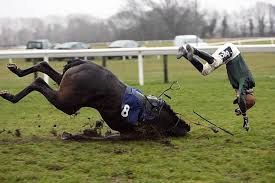
Day one in the books and what a day it was! Willie Mullins came to the Cotswolds with what many believed to be his strongest team ever. Bookmakers feared Mullins four big guns Douvan, Un de Sceaux, Faugheen and the heiress apparent to Quevaga’s thrown, Annie Power. By the time the Mares Hurdle came round Mullins’ favourites had all done the business meaning an Annie Power victory would take down the betting industry to the tune of a reputed €50 million. We know the story by now, probably what bookmakers regard a fairytale ending. Ruby Walsh’s mount, the roasting hot favourite, blundered at the last and came down, horse and rider thankfully safe, as it was a nasty looking spill. With the dreams of thousands of punters left in tatters, Polly Peachum and Glens Melody were left to battle out a thrilling if anti-climatic race to the line, the latter winning by a short head. Such is the nature of the game that bookmakers the length and breadth of Ireland and the U.K. will have breath a sigh of relief when the mare came down. By all accounts, when Annie and Ruby came unstuck, an initial terrified silence was followed by a collective groan, with the life, and probably already banked winnings of thousands of disgruntled punters sucked out into the Gloucestershire evening. So, Ruby’s four timer was denied but jockey and horse are in fine fettle and that, at the end of the day, when the money is won and lost, is what really matters.

We shan’t dwell too long on the results of the opening day as we more look forward to what’s coming this afternoon. Douvan and then Un de Sceaux, the latter ‘a pure freak’ in his trainers words, opened the account for the Mullins Walsh tandem in the Supreme Novices Hurdle and Arkle Trophy respectively. Barry Geraghty had the temerity to interrupt the Closutton victory parade with a fantastic ride on Neil Mullholland’s charge, The Druid’s Nephew to take the Handicap Chase. Normal service was soon resumed though. Ruby and the much-touted machine, Faugheen, were absolutely majestic in winning the Champion Hurdle, leading home stable mates Arctic Fire and the aging but irrepressible Hurricane Fly to give the Co Carlow based trainer what must have been one of the greatest days in his illustrious training career. Glen’s Melody will have added a somewhat surprising cherry on top for the champion trainer and a popular victory for Paul Townend.

For those of you who listened, and we’d be surprised if you did, Josses Hill and the aforementioned Polly Peachum were good each way selections though life could have been so much prettier if not for the latter coming up just short. Anyway we’ve come out of the day unscathed, Cause of Causes helping plenty of lost causes, and with a little in the war chest for today. Let’s have a look at day two of the 2015 Cheltenham Festival.

Wednesday 11th March 2015 – Feature Race: Queen Mother Champion Chase

Today’s proceedings get under way with the Neptune Novices Hurdle, a race won last year by the star of today’s show, Faugheen.  You’ll never believe this, but the favourites come from the yard of…….. Willie Mullins. Outlander and Nichols Canyon head the markets, closely followed by Dermot Weld’s Windsor Park. Outlander last defeated Martello Tower, who we like for Friday’s Albert Bartlett Novices Hurdle so the former’s performance this afternoon will be a useful yardstick. Nichols Canyon put away Windsor Park at Punchestown in February, but the three and a half lengths aren’t insurmountable. Nonetheless, we’ve keen been on Nichols Canyon for a while now and trust in him to get the day off to the perfect start. Nichols Canyon should go off at 4/1 so back him each way to protect your neck.

Next up is the R.S.A. Chase, a race we would have found far tougher to call, if a big favourite of this column, Coneygree hadn’t decided to take his chance in the big one on Friday, the Gold Cup. We think the latter would really have put it up to the Michael O’Leary owned Don Poli but in his absence we don’t think there’s anything that holds a flame to Bryan Cooper’s mount. Indeed many have Don Poli as their festival banker. Incidentally, and we’re not saying for a second that Ruby Walsh is done but we think Cooper is the man to eventually take the mantle as Ireland’s leading national hunt jockey.

On to the feature of the day, the Queen Mother Champion Chase, the test to find the finest national hunt sprinter, two miler, over a fast arriving twelve fences. The race was given its present name in 1980 – the year of the Queen Mother’s 80th birthday – to recognise her fantastic contribution to national hunt racing. We’re sure that like us, the late, great lady would be intrigued by this afternoon’s centrepiece and probably as puzzled by the conundrum of picking a winner.

It may sound strange but this year’s renewal, despite including the last two winners, is in the eyes of far more astute judges than us, wide open. We have to start with a real darling of Cheltenham, the winner of this race in 2013, Sprinter Sacre. Under Barry Geraghty, the ‘Sprinter gave an adoring audience a masterclass of power, poise, jumping excellence and, of course breathtaking speed to put in the most dominant performance this column has ever seen. He went off an unbackable favourite, at 1/4, and proved his once in a generation quality, with a nineteen length victory. As you may have guessed something happened, the something coming in the form of a potentially career ending heart scare. Sadly this meant the horse that we believe would have lit up racing in the manner of Best Mate, Kauto Star and Istabraq was left on the sideline until last Autumn. Scratch what we said yesterday about a potential victory for Hurricane Fly. If Sprinter Sacre wins today, the entire of Cheltenham may just lift off. He has run just once in sixteen months though, a valiant second to our selection, Paul Nicholls, Dodging Bullets. Under Noel Fehily, he beat Sprinter Sacre on his last day out at Ascot but the overwhelming feeling was that the latter’s stamina failed him after a lengthy absence. We think Dodging Bullets is an underrated horse who probably hasn’t garnered the respect he deserves coming into today. Sire de Grugy won last year, very convincingly it must be said but suffered a considerable injury setback. While impressive in his last two victories he may have emptied his tank a little in victory at a sticky, heavy Chepstow, just weeks ago.

Sprinter Sacre’s ceiling is infinitely higher than our selection but there’s no way he reaches those heights again though he may not need to. Incidentally, if ‘Sprinter is out of the reckoning coming up the hill Barry Geraghty won’t push him too hard. Sire de Grugy is the reigning champ who won’t drop his crown without a fight, but how much does he have in him? Further, there is Willie Mullin’s Champagne Fever*, who but for a short head defeat in last year’s Arkle, would be three for three at the festival. Course form is vital and perhaps this is why Dodging Bullets, the only one of the four at the top of the market without a March victory in Cheltenham is avoided in most quarters. Only victory today will swing opinion and we’re willing to stick our neck out for Paul Nicholls’ less fancied horse.

The last race we’ll mention is the Festival Champion Bumper, a hugely popular bet with the punters, despite the perennial difficulty in picking the winner. Bumpers are flat races, so no fences, run under national hunt rules. All horses involved are young, inexperienced and quite often unpredictable. The one that we and many others have liked for a while is Moon Racer, trained by David Pipe. Willie Mullins saddles up just the seven horses for this race, so anything could happen. We really liked one of these, Up for Review, when seeing him romp to victory at Leopardstown at Christmas, but he disappointed massively in defeat three weeks ago at Naas. 33/1 is tempting though. Willie Mullins son, Patrick, rides favourite Bordini and the younger Mullins rarely gets them wrong. Nonetheless, let’s stick with the courage of our convictions. Moon Racer to send us all home happy this evening.

Wednesday’s Picks

1:30 – Neptune Novices Hurdle – Nichols Canyon e/w @ 4/1

2:05 – R.S.A. Chase – Don Poli – 7/4

3:20 – Queen Mother Champion Chase

  1. Dodging Bullets e/w @ 11/2
  2. Sire de Grugy
  3. Champagne Fever

5:15 – Champion Bumper – Moon Racer e/w @7/1

*Champagne Fever has been announced a non-runner in this race
Standard
Cheltenham Festival 2015

Time for Some March Madness

And so, the very pinnacle of the National Hunt season is upon us. From the raising of the white flag at 1:30 on Tuesday to the highlight of not just the week but the year, Friday’s Gold Cup, the general public, for perhaps one of the few times of the year shall be engrossed by horse racing. This column always gets excited in the weeks before the festival, places a series of foolproof bets and watches as the wheels inevitably come off. Still like a hopeless romantic we return each year safe in the knowledge that we’ve learned from our mistakes and the hours spent studying completely differing opinions will come to fruition. We’ll provide our highly uneducated thoughts, a preview of sorts, on a daily basis in advance of the following day’s racing, with an emphasis on the feature race of each day. This is not, we repeat not an in-depth analysis of the betting markets, more a background to the big races, with a few value bets recommended.

With so many previews appearing this week, Straight Up Sport has decided to provide a slightly less scientific approach in proposing some gambling tips this week.

Firstly, as last year was a success we’re going to apply the short term memory rule and erase the years of abject failure to the scrap yard of history. We won last year therefore we’re definitely on a hot streak.

For the very casual gambler who likes a couple of euro each way you can a do a lot worse than adhering to the ‘if in doubt back Ruby Walsh’ Rule. Similar rules apply to AP McCoy and Barry Geraghty. Emotion or more specifically sentimentality will get the better of many punters this week so only choose the AP route if you think he’s going to win the race. While the world and its mother know the Antrim man is bowing out shortly, the chances are, though I could well be proven wrong, that the horses don’t.

Another trick we suggest is that once you’ve made your bet presume the money is lost. Thereafter, if the horse comes home in first it’ll feel like you’ve won not just the bet but also the few quid which you already thought you’d pissed away into the wind. Remember, most importantly, never to chase your losses. You could end up in a worse hole than the one Alice fell through.

There are literally hundreds, maybe thousands of Cheltenham previews each year. The men and women providing these punting tips are clearly well versed in the game  but remember not all of them can be right. In fact, invariably, the majority will be completely wrong.

If you read a number of previews and one or two horses keep appearing, particularly ones at a bigger price, then chances are you should be getting involved there. If however you enjoy the slightly more unconventional method of picking a horse because you like the sound of the name then by all means go for it. This reminds us of the 2013 festival when Our Conor, who tragically died in last year’s Champion Hurdle, romped home in the Triumph Hurdle at a fairly tasty price of 5/1. While contentedly collecting our modest winnings, we overheard a lady saying to the bookmaker “Oh, I only backed him (Our Conor) because we have Conor at home”. To which the bookmaker, whose pockets had just become considerably lighter, replied, extremely deadpan, “Seems like half the town has a Conor at home”.

Tuesday 10th March – Feature Race: Champion Hurdle

If you happen to have a relative called Un de Sceaux or Faugheen at home then this could be your lucky week.

The former lines up in the Arkle Trophy tomorrow, a race for novice chasers, over the minimum of two miles odd. Chasers for the uninitiated, race over fences as opposed to the smaller hurdles. These are the prospective Usain Bolts of chasing and the winner tomorrow will likely go on to contest the Queen Mother Champion Chase at next year’s festival.

We think Un de Sceaux is very hard to oppose but at an extremely short price, 4/7 generally, we won’t be going near him. He should open Willie Mullins account for the festival, but we like Josses Hill, admittedly disappointing this season to repeat his performance in last year’s Supremes Novices Hurdle and run into the places at a big price. Mullins incidentally sends perhaps his strongest ever team to the Cotswolds. Faugheen, Un De Sceaux and Vautour are among only a handful of National Hunt racing’s equivalent of the all-conquering Barcelona side of 2011.

We move to the Champion Hurdle, the highlight of Tuesday’s racing, and for some the whole festival. This is hurdling’s grand prize, the most anticipated race of the week after the Gold Cup. This is a race that has produced plenty of Irish winners, most notably the legendary Istabraq, who won three on the bounce for Charlie Swan and Aidan O’ Brien, from 1998-2000. Last year, the Jessica Harrington trained Jezki, given a fantastic ride by Barry Geraghty, enjoyed a narrow victory over My Tent or Yours. The latter incidentally is out of this year’s renewal due to injury. Tomorrow sees Willie Mullins’ Faugheen, winner of last year’s Neptune Novices Hurdle, lining up as the hot favourite. You may have noticed that there’s a theme forming here. Against the better judgment of far wiser people, we’re recommending last year’s third placed, The New One to be first past the post tomorrow. Hampered badly last year when Our Conor tragically and fatally fell, six from home, Sam Twiston Davies mount came home like the TGV and finished just three lengths back of the eventual winner. We agree that Jezki, the reigning champion doesn’t get enough respect and that Faugheen justifiably merits favouritism. However, The New One has experience in the race and you sense the Twiston Davies team will be desperate to succeed following last year’s unfortunate sequence of events.

It would be remiss of us to preview this race without mention of the absolute superstar that is Hurricane Fly. The ‘Fly, also trained by Mullins, has had an incredible career, winning tomorrow’s race twice (2011 and 2013) and incredibly is unbeaten in his ten runs at Leopardstown. This counts for little this week though in what is likely to be his Cheltenham swansong. Should Paul Townend somehow steer the 11-year-old to success tomorrow afternoon Cheltenham will shake to its very foundations. However Ruby Walsh, top dog in Willie Mullins yard, chooses Faugheen over his old friend tomorrow. The ‘Fly won’t take offence though. Business is business. And should he finish in the places, more likely if there’s some give in the ground, that will be an achievement in itself. We’d be delighted if we were eating our words come this time tomorrow but frankly we feel this would be one fairytale finish too many. Still, given his ludicrous success; he’s a twenty-two-time Grade 1 winner; we doubt there are many who’d complain if they prepared a golden stable for Hurricane Fly in the Hall of Fame.

To the best of the rest on Tuesday. We are advised by a well-informed friend of Straight Up Sport that Harry Fry’s Jollyallan, ‘a proper animal’ to quote our associate may well overcome Willie Mullins’ well fancied favourite, Douvan in the Festival opener, the Supreme Novices Hurdle. AP McCoy should be on board so what better way for him to commence his final Cheltenham Festival.

The legendary Quevaga, the undisputed, widely adored queen of Cheltenham for the last six seasons won’t be with us this year having retired after last year’s festival. She became the only horse to win at six successive Cheltenham festivals. Her absence hasn’t exactly thrown open the field in the Mares Hurdle though, as stablemate Annie Power, narrowly beaten by More of That in last year’s World Hurdle, aims to take up the mantle of the best mare in town. She’s a class apart from anything else in the field, but she’s been out since the autumn, without a tune up before tomorrow’s race. Willie Mullins would never run an unfit horse but still it will be interesting to see how she reacts to her lengthy, enforced break. We like Barry Geraghty’s likely mount, Polly Peachum, as an each way bet. Now we are completely contradicting ourselves here as the 10/1 shot pulled up on her last outing at Kempton but it has been reported by connections that there was no lasting injury or effect from that particular day. Trainer Nicky Henderson, a master at getting his horses in tip top shape for Cheltenham, said last week that she’s fresh and ready to go.

Tuesdays Picks (We will forecast our top three for the feature race each day)


1:30 -Supreme Novices Hurdle – Jollyallan e/w at 8/1

2:05 – Arkle Trophy – Josses Hill e/w at 10/1

3:20 – Champion Hurdle

1. The New One

2. Faugheen

3. Jezki

4:00 – Mares Hurdle – Polly Peachum e/w at 10/1

Before the Festival starts here are our four picks for the week, one from each day, which we’ll combine in a €1 e/w accumulator, on the off chance that the stars align and everything falls into place. There’s only one favourite in this selection so ‘caveat emptor’. In fact, the likelihood of all four winning works out a little bit north of 3600/1 so we’ll leave you good reader to use your own judgment here.

Tuesday – Supreme Novices Hurdle – Jollyallan (8/1)

Wednesday – Neptune Novices Hurdle – Nichols Canyon (4/1)

Thursday – Ryanair Chase – Hidden Cyclone (8/1)

Friday – Albert Bartlett Novices Hurdle – Martello Tower (10/1)

And, even if you don’t gamble so much as a red cent this week we implore you to take in the Festival, particularly the blue riband event, the Cheltenham Gold Cup, the pinnacle of the national hunt season. Those who witnessed last year’s renewal were treated to one of the most dramatic finishes in the illustrious event’s storied history, a live stewards inquiry eventually seeing Lord Windermere named winner in rather controversial circumstances. Be sure to watch this year as the most breathtakingly fearless and talented men, women and, of course, horses in the business vie for glory on the greatest stage of them all.

Standard
English Premier League

Louis van Gaal – Wrong Man in the Wrong Place

This time last year, Manchester United fans across the world were lamenting the admittedly, below average performance of doomed – from – the off manager David Moyes. Indeed, in hindsight, Moyes was massively out of his depth and unquestionably struggled to bring the players around to his way of thinking. Which was…….?

Moyes’ task, replacing the most successful manager that English football will ever see, Sir Alex Ferguson, was gargantuan from the off. Nonetheless, he shopped poorly during the summer, like a panicked man on Christmas Eve, and limped unconvincingly through the opening weeks of the season before the wheels well and truly came off. By May, even the most ardent of Moyes’ sympathisers, this column included, knew the time had come for the Glaswegian to walk the plank.

And so, all the way from the Netherlands, came the much touted, Louis van Gaal, to save the ailing giants. Of course, one can see the point of view of the board, and particularly Chief Executive, Ed Woodward, desperate to recover from the disastrous Moyes experiment. Woodward is commercially astute and ensures the club maintain their incredible, worldwide profitability but supporters don’t celebrate wildly upon hearing of the continued economic viability of their club over a sustained period of a time. They want success. Just ask any Arsenal fan if they’d prefer record profits or a team who could win the Premiership. Thus Manchester United needed a big name managerial signing this summer gone by. Louis Van Gaal, the successful but confrontational Dutch manager, provided this to a certain extent.

Granted, Van Gaal led the Netherlands to the World Cup semi-final in Brazil last summer and we give credit to his strict regime, which contributed handsomely to the Dutch side’s very impressive third place finish in the tournament. The Dutch seem to be a strong minded bunch so perhaps his dictatorial approach was necessary to keep the squad focused and prevent the infighting, infamously associated with the Netherlands squad at most major tournaments. The Netherlands appear to have a seemingly infinite conveyor belt of tactically astute, technically competent players. Winning them over mentally and getting them to co-exist is more than half the battle.

This is not the case at Manchester United. From day one, players arrive at Manchester United knowing they are but a small cog in a huge wheel that will continue to turn long after they’ve departed. This is an outlook particularly associated with the Alex Ferguson era. Even Ferguson himself, ludicrously successful, knew that as great as his impact would be, the club would inevitably have to move on after his reign if not by desire, then certainly by necessity.

The concept of bringing in an experienced coach to steady a suddenly rocky ship seems completely sound in principle but the choice of Aloysius Paulus Maria Van Gaal was not. One can’t help but feel that Van Gaal took this job to put an exclamation point on his own career as much as to bring stability to the red side of Manchester. The 63-year-old seems to be an extraordinarily complex character and one that has an unbending belief and insistence on adhering to his turgid system, the much-debated 3-5-2.

One of our main gripes is that if Manchester United wanted a man to bring a calming influence and a sense of familiarity then, why not perhaps Guus Hiddink, equally experienced but far less confrontational. Van Gaal’s professional appointments are rarely lengthy. Interestingly, however, almost all of the jilted clubs and the Netherlands, opened their door to him once more proving beyond doubt that he has an excellent football brain but not the demeanour to match.

Incidentally, he never returned to manage Ajax, the place where he had his longest tenure and his greatest success, winning the Champions League with a dream team including, amongst others; the de Boer brothers, Ronald and Frank, Patrick Kluivert and Marc Overmars. Was this because he achieved everything he felt he needed to while there? The second bite at the Netherlands cherry came after he failed to obtain qualification for the 2002 World Cup, a humbling defeat to the Republic of Ireland sealing the Dutch fate. The Barcelona return was seemingly necessitated after the first spell was marred by what Van Gaal saw as cultural differences and a refusal by certain players (see Rivaldo) to follow his systematic approach.

Most damningly, at least from Manchester United’s point of view, is the fact that they have brought in a man who has decided to cast aside the attacking philosophy always so closely associated with the club. Why bring in someone who completely disregards the belief that entertaining the fans is almost as important as winning? Right now, Van Gaal seems to have sapped the enthusiasm and love for the game out of some outstandingly talented players.

Look at Angel di Maria, man of the match in last year’s Champions league final. The Argentine is a mercurial player, one who is willing to try the audacious. Players of this ilk will lose the ball more often than the man who passes it ten yards, square. However, they also possess the ability to pull off the incredible and, for this very reason, should be allowed express themselves.

Right now di Maria looks like a friend you might know that used to be the life and soul of the party, a bit wild, until they met a person who seemed determined to sap all the fun from them. Look too at Radamel Falcao. The Colombian looked a major coup in the summer, even if only on a rather expensive season-long loan deal. Left in his tracksuit on Wednesday night as Manchester United bumbled their way to victory in St James’ Park, he looked like a man already contemplating whether Madrid or Paris would be nicer in the autumn.

Manchester United will not challenge for the Premier League for a number of years. Even qualifying for the Champions League seems a tall order at the moment. However, if they are going to lose, they should do so playing the cavalier football so closely with associated with the famous old club. David Moyes’ brief era was rightly criticised for a lack of direction from the manager and a failure to identify a specific style of play. A season later the side are playing some of the most aesthetically unappealing football in the league but are being excused because the coach has some mythical philosophy and the board dare not consider firing a second coach in a year, after an unprecedented era of stability.

When Van Gaal parted ways with Barcelona for the first time in 2000 he famously uttered, “Amigos de la prensa. Yo me voy. Felicidades.” (Friends of the press. I am leaving. Congratulations.) The British press have been far more forgiving, admittedly it has only been seven months. However, if the abject nothingness of Manchester United’s style of play continues, then how long, one would wonder before the knives begin to sharpen?

Standard
Cricket - World Cup

Cricket World Cup – Update

Reality Bites for Ireland

Unless you’re a student, insomniac or night shift worker, chances are you haven’t had an opportunity to watch a great deal of the events unfold in Australia and New Zealand, over the last few weeks. Each team has reached the half way point in the tournament’s group stages and as expected the pre-tournament favourites have, as good as, booked their places in the quarter finals.

New Zealand and Australia have proven extremely difficult to separate, indeed the Back Caps only overcame the Baggy Green by a single run, in a thriller in Auckland, last Saturday. Reigning world champions India, despite a winless winter in Australia, have come out of the blocks all guns blazing, destroying all before them, including the world’s third ranked side, South Africa. To confuse matters further, South Africa responded to this embarrassing defeat, to the Indians, with demolition jobs on both the West Indies and yesterday morning, Ireland. England have been shambolic, Sri Lanka and the wondrous Kumar Sangakarra the latest side to make the founding fathers of cricket sigh in their graves. You could argue their tournament is playing out like a Greek tragedy but one wonders will there be any meaningful ending? Perhaps more like a farce then.

Ireland find themselves in about as good a position as they could have hoped for at this stage of the tournament, in terms of victories, having won both games before the humbling at the hands of South Africa. However Ireland’s net run rate; as with everything in cricket, a more complicated equivalent of points for and against, except using runs; was damaged badly by the South African’s free swinging batsmen and a dual demolition job of Ireland’s top order by the world’s number one ranked fast bowler, Dale Steyn, and the in form Kyle Abbott. Ireland actually got an early breakthrough but then succeeded to drop, Hashim Amla, South Africa and the world’s second best batsman, on 10. Amla would go on to score 159, while his partner Faf du Plessis, also dropped on 19, added acid to the wound by scoring a century of his own, leaving Ireland with an unchaseable target of 412 to win. South Africa did not even need to rely on their imperious captain AB de Villiers, who though, while not a bowler, still managed to take a wicket yesterday. For those with even only a passing interest in cricket, watch this man bat before the World Cup ends. He has timing, style and power and as Lionel Messi appears to have a second longer on the ball, so the ball seems to come to de Villiers that little bit more slowly. Oh, and he’s extremely destructive and fun to watch.

Ireland in response, buckled early, losing captain William Porterfield, and the heroes of the West Indies victory, Paul Stirling and Ed Joyce, when barely into the 20s. To their absolute credit Ireland’s batsmen and particularly their bowling tail enders, stuck manfully to the unenviable task of damage limitation, taking Ireland from 48-5, potentially disastrous, to 210 all out, reasonably respectable. Unfortunately they came up against an incredibly talented juggernaut, who had been, completely unexpectedly, left for dead by India. You generally don’t need to poke a bear too many times before he jumps up and devours you. India poked the bear, so the bear annihilated the next two teams he saw, West Indies and Ireland. Law of the forest or something like that. That blip aside, the South Africans have confirmed that they will be around for the business end of the World Cup. They have become the first international side ever to post 400 runs in consecutive one day (50 over) games.

Still, like Leicester City travelling to the Etihad Stadium tonight, these are not the games that Ireland, in all honesty, will have earmarked as winnable. Ireland’s biggest game of the tournament arrives on Saturday, when they face a Zimbabwe side, who while themselves have only victory, managed to give considerably more problems to the South Africans, admittedly undercooked at the time, than Ireland did. However, this will be tempered by the fact that Zimbabwe completely blew it on Sunday against a Pakistan side who were absolutely reeling early in their innings, and even still posted a very meagre total of 235. Zimbabwe were well on course for victory before dramatically collapsing from 150-4 to 215, all out. Sunday’s snatching of defeat from the jaws of victory means the Southern Africans are as good as gone from this World Cup.

Nonetheless, they are still, at least in the eyes of the International Cricket Council; a body dominated almost exclusively by Australia, England and India; superior to Ireland and more deserving of full test status. Saturday, therefore, provides the Irish with a fantastic opportunity to confirm their status as a top eight, or at the very least, top ten calibre side. The I.C.C. in their infinite wisdom, have decided to reduce the number of teams competing in the 2019 World Cup from 14 to 10. It is an idea that seems almost ‘Blatteresque’ in its construction. The game is expanding and reaching unprecedented levels of popularity outside of the traditional strongholds so, why reduce the playing pool?

There is a serious misconception that Associate nations such as Ireland, Scotland and Afghanistan dilute the quality of the tournament and create too many one sided contests.  Unsurprisingly the Associate Nations have lost more games than the Test nations at this World Cup. But, for the most part, the really non-competitive games have just as often involved two of the perceived big guns. Indeed, the biggest defeat of the group stages was a 257 run hammering, inflicted by the now firing South Africa on West Indies. And, the most humiliating defeat was suffered, and I say this with such a heavy heart, by the Irish led England. Last Friday in Wellington, New Zealand were able to chase down England’s paltry total of 123 within 12.2 overs, or to put it bluntly, with three quarters of their innings to spare. It seems the I.C.C. are considering a rethink for the 2019 tournament, which to their credit, at least, is more than the incompetents in F.I.F.A. seem willing to do, ahead of the shambolic Qatari World Cup. We’ll keep an eye on any developments in this regard.

Captain Morgan on the Rocks

England’s tournament continues to plummet into disarray. The comfortable victory over Scotland provided brief respite before Sri Lanka put them to the sword with remarkable ease on Sunday. England have made a catalogue of errors laughable enough to make even Father Ted Crilly seem competent. Their best batsman of the last ten year’s, Kevin Pietersen, is providing television commentary on this World Cup, instead of playing because, well, he’s deemed to be a prima donna, asshole. Granted, there’s more to it than that but it seems incredible that England can’t find some way to accommodate Pietersen, an incredibly gifted, game changing batsman. Sport, as we are all aware, is full of tricky characters. Surely managing these personalities is part and parcel of the, and there’s a clue here, management side of the game. Unfortunately, things really are not getting any better for captain, Eoin Morgan. Completely out of form with the bat and with his tactical decisions being derided, he has now been further criticised in some quarters of the English media for not singing God Save the Queen, before English games. Why, oh why, would any English journalist get het up about a man born and bred in Ireland refusing to sing a song about how fantastic the Queen is? We don’t do politics here on Straight Up Sport but, come on, that’s just plain ridiculous.

Anyway, as a gesture of good will, we may have just devised a solution for the I.C.C. to do away with all this furore. Give Ireland full test status, grant us automatic entry to future World Cups and let our best players come home, to represent Ireland against the cream of world cricket. Then, England can return to blaming defeat on conservative coaching, sterile tactics and the use of average players, while the best English player of his generation watches from his couch. Not to blaming it on a man who won’t sing a song that means absolutely nothing to him.

Standard
Six Nations

Six Nations Review – Round 3

Of course, it’s impossible to reach the halfway point in a five round tournament, unless you’re pedantic and choose halftime in the France v Wales game on Saturday evening, but this is perhaps as good a time as any for a midpoint recap.

This weekend threw up two surprises, most notably in Murrayfield, proving for once that the bookmakers are not entirely prophetic. Scotland were pipped at the end by an Italian penalty try and while bad luck played its part; Giovanbattista Vendetti’s try; Scotland, like Charles Stewart Parnell were in many ways the architect of their own downfall. At least Parnell’s troubles were instigated by, amongst other things, his presumably enjoyable dalliance with Katherine O’ Shea. Scotland’s failings have been brought about largely by incompetence and a failure to execute.

Inaccuracy has been a real problem for Scotland. Late on in Saturday’s game, having been somewhat fortunate to win a penalty on an Italian scrum, Peter Horne, in as an enforced replacement, was entrusted with, what the entire of Murrayfield would have presumed to be, a safe kick to touch. When the friendly confines of touch were all that were required, Horne, like Finn Russell in the defeat to Wales, unforgivably missed and returned the ball to the Italians. An ensuing maul and further indiscretion by the Scottish pack handed Italy a hugely welcome and genuinely unexpected victory.

It seems patronising to say that Scotland needed this victory more than the Italians but frankly, they did. The Scots are coached by the man, Vern Cotter, who along with Joe Schmidt brought Clermont Auvergne to their rightful place at the top table of French club rugby and consolidated their position there. Sergio Parisse aside, how many of the Italian team would honestly force their way into the Scottish team. The Scots sparkled intermittently in the opening two rounds of the tournament so, perhaps on Saturday, they, like this column, failed to regard the Italians with the respect they merited. After the French defeat, there was a sense here that Scotland would have a real shot at home victories against the Welsh, Italians and Irish, and a chance to go to Twickenham with, at the very least, a puncher’s chance. Fool me once Scotland and all that jazz. Scotland’s response to this latest defeat will prove just how much character and resilience Kiwi, Cotter has instilled in this genuinely talented side. Skills and talent are only so impressive. After all, it is execution more than ability, which invariably sees a side over the line. Only a brave man or a fence sitter will honestly believe that Scotland travel south in two weeks with much more hope than a man with a lottery ticket.

Italy, on the other hand, will look to their upcoming Stadio Olimpico clash, with a French side in disarray, with real belief that they can cause an upset, the French monkey having been lifted off their back following 2013’s dramatic victory. The Italians rode their luck at times this past weekend but their pack, their rolling maul in particular, was infinitely superior to their hosts. Kelly Haimona is not an international outhalf and how Italy long for a reliable place kicker, in the mode of all-time great Diego Dominguez. Sides like Italy, limited in attack, simply can’t afford to leave points behind and they must find a kicker whose success rate is, at least, somewhere between 75 and 80 per cent. Still, if metaphorically, Italy went to sleep on Friday to relentless rain and gloom, on Sunday morning they will have awoken to a rather unexpected but welcome Indian Summer.

Wales’ championship ambitions are well and truly alive and kicking once more. To his and their credit, Warren Gatland and his big boppers went to France looking for a fight and, beyond any shadow of a doubt, won the physical battle comprehensively. The most experienced centre pairing in the Six Nations stood strong and there were also exceptional performances from Dan Lydiate and outstanding captain, Sam Warburton. Dan Biggar was accomplished and composed throughout, taking his try extremely well and, as ever, Leigh Halfpenny’s accuracy from the dead ball was close enough to faultless. George North responded well to Gatland’s demands that he become more involved in the game, his carries visibly sapping the will of the French defenders. Adding guile to the brawn was the nippy, dangerous, livewire Rhys Webb at scrum half. We accept that Gatland’s gameplan requires far more straight lines than arcs but a slippery customer like Webb is vital for variation. Still, for the most part Wales stuck to the tried and trusted and, as France are limited and wholly ineffective for large parts of each of their contests, the Welsh blueprint worked just fine. Ireland, their next opponents in what is sure to be a complete hum dinger in Cardiff, play a very specific style of rugby. Their game is somewhat rigid but remember, more importantly, that it is extremely effective. Following a system and sticking to a job, almost Germanically, should not be confused with being limited. Wales will fancy their chances in two weeks and based on their last two outings they should do, but beating this particular French side, even away from home, will pose far less problems than Joe Schmidt’s side.

While discussing the finer points of purgatory with his colleague Ken (Brendan Gleeson) in 2008’s In Bruges, Colin Farrell’s character Ray exclaims, “You weren’t really shit, but you weren’t all that great either. Like Tottenham.”  Perhaps he was prophetically talking about the current French rugby team and, of course, Tottenham. In any era. France made sweeping changes for Saturday evening’s game against a, let’s be honest, above average but far from spectacular Welsh side. Early on the French threatened without ever looking like cutting the Welsh midfield to pieces. The Remi Lamerat experiment never really took off, injury robbing the Castres centre of the opportunity to impress his coach and equally importantly, a decidedly frustrated French rugby public. Mathieu Bastareaud came on early in his place and barring his involvement in Bruce Dulin’s try; incidentally the first French try against Wales in four years; the Toulon man provided little more than hard carries into the arms of the improved Jonathan Davies and ever dependable Jamie Roberts. France, rather alarmingly, despite a raft of changes showed little or no ability to bring the ludicrously talented Wesley Fofana into the game. The future, or more pertinently the upcoming World Cup, looks grim for France, but, since they were able to dispense with their coach, Marc Lievremont’s advice following a chastening defeat to Tonga in the 2011 World Cup and lead themselves to the final where they were unlucky to lose to the final to New Zealand, in Auckland, we would simply say…. watch this space and dispense with all rationale when it comes to the French.

The weekend’s final game saw a good, honest slobber knocker between the two form sides, Ireland and England. Ireland won because, unsurprisingly, they were superior in a number of facets of the game, particularly in their kick and chase game. England seemed a little perturbed by Ireland’s insistence on kicking the ball with great regularity. Perhaps they should have done the same. Except better. Perhaps we’re being facetious, but given they spent most of the week informing everyone how they were preparing for the aerial bombardment, by Sunday evening it looked like a classic case of the dog eating the student’s homework. Ireland had star performers all over the pitch, each adhering diligently to coach, Joe Schmidt’s fastidiously prepared game plan. It would be impossible not to single out Robbie Henshaw for individual praise. This column is open to correction but it appeared that he never once took a backward step with ball in hand. England, always robust in every facet of the game rarely breached the Irish defensive line, Billy Vunipola and Anthony Watson aside, and Henshaw was to the fore of the exceptional, home rearguard effort. The skill, awareness and timing for his try looked like a hybrid effort one might see from Tommy Bowe and Ireland’s greatest ever player, Brian O’ Driscoll.

Ireland have been accused of being limited, indeed strictly speaking they are, but if you keep on winning then how necessary is change? Remember, the English World Cup winning side in 2003 were blessed with standout players all over the pitch but it was very rare, particularly as the tournament progressed, that you saw any sort of ‘heads-up’, creative play, aside of course from the irrepressible Jason Robinson. What about the mighty All Blacks in the 2011 final? They overcame the French in the final on a whopping score line of nine points to eight. It is agreed that those teams that have won the World Cup are built on rock solid defence, a mobile pack who are ferociously competitive at the breakdown when necessary, a near faultless place kicker, and a commanding pair of half backs. New Zealand for all their glorious talent have won the tournament the same number of times as the, dour by reputation, South Africans. Perhaps Ireland will need to bring something different in Cardiff but if it’s a dog fight that the Welsh are looking for, and it most assuredly will be, then Paul O’ Connell and his charges will relish the challenge.

For all the praise of Ireland’s performance yesterday, it is hard to say that they were ten points the better side than their visitors. A number of moments had a huge baring on the outcome of the game. The instance most observers will highlight was Devin Toner’s first half lineout steal, deep in the Irish 22 after George Ford and Chris Robshaw decided to forego a relatively easy three pointer. Setting down a marker? Arrogance? It doesn’t really matter as the big second row’s excellent rob gave Ireland renewed vigour.

England looked very dangerous on occasion. Billy Vunipola showed outstanding pace to race fifty yards untouched off a messy scrum and Anthony Watson looked menacing anytime the game broke up. Additionally, the English spent the majority of the final fifteen minutes sending wave after wave over the top of the line but, with credit to the home defence, the leading point scorers in this year’s Six Nations were unable to cross for a try. A last gasp try, disallowed for a forward pass to Jack Nowell, would probably, on the balance of things, have been justified but the game was up for England by then. England probably left these shores a touch chastened, knowing they were outfought by an incredibly disciplined, aggressive pack, which incidentally looked none the weaker for the loss of back row stalwarts Sean O’ Brien and Jamie Heaslip.

Still, while Ireland may have won the battle yesterday, one suspects the English will believe that they can finish the war on their terms in October.

Standard
Six Nations

Six Nations Round 3 Preview – Bring The Noise

IRELAND v ENGLAND – Sunday 1st March – 3 p.m., Aviva Stadium, Lansdowne Road

So weekend three is upon us and come Sunday evening this year’s Six Nations Championship should finally begin to take shape. Just one side will be left in the hunt for the grand slam, three sides will have realistic championship ambitions and the final destination of the not so sought after wooden spoon will be much clearer. We look first to Sunday’s game in Dublin, a Grand Slam eliminator barring a very possible draw, and a game which both sides will view as an opportunity to lay down a marker for the upcoming World Cup.

Both sides come in to Sunday’s showdown with unblemished records in this year’s tournament and while both sets of players will wake up bruised and battered on Monday morning, only one can possibly still have their Grand Slam hopes intact.

Ireland and England, indisputably the two best sides in this years tournament thus far, enter this weekend having faced markedly different challenges in the most recent round of the tournament. England overcame a sloppy start against an, as expected, fired up Italian team to pull away convincingly in the second half, finding real cohesion in their attacking play as the game progressed. There was also the very welcome return, for anyone who enjoys attacking rugby, of the mercurial Danny Cipriani. By the end of the game Twickenham was bouncing again and you sense that the English are coming with little fear of losing. Once their tail is up, their demeanour can betray arrogance but Stuart Lancaster is working tirelessly to remove this trait from the team. The team and Lancaster himself do emanate a real sense of confidence, an attribute, which once instilled in a side makes them very difficult to beat. England do confidence the way Ireland used to do hard luck stories. Very well. However, the confidence in Lancaster’s side, unlike say Andy Robinson’s or Martin Johnson’s version, is well placed. England’s pack, relatively callow, have the usual Anglo combo of sheer physical presence and innate obduracy. The side are led fantastically well by the tireless, prototypically English flanker Chris Robshaw. Billy Vunipola has found form again and the new second row pairing of Dave Attwood and George Kruis are growing in stature, no doubt buoyed by the fact that Lancaster has released a fit again Geoff Parling and Courtney Lawes to play for their respective clubs this weekend.

Ireland certainly pose a bigger threat than Italy and most probably Wales. The loss of Jamie Heaslip, seemingly bullet proof before this season is crucial, but Joe Schmidt in the manner of Bill Belichick, one of the NFL’s greatest ever coaches, does not curse the fates when a player goes down injured. Instead, he chooses his replacement and ensures the player is on board with the team’s battle strategy. The Irish, and their backrow in particular, went to all our war with the French in their recent victory, and the ferocity and intensity of the collisions produced a visceral spectacle. More importantly, for the players and coaches, it produced a win against a side lacking in creativity but certainly not aggression or commitment. Ireland defended heroically from numbers one to fifteen, Jonny Sexton confirming once more that he is both fearless and brilliantly effective in the tackle.

Incidentally, this column found the media’s admonishing of France for, shock horror, sending their big runners high at Sexton about as enlightening and relevant as a George Hook half time rant. My suspicion is that rugby coaches have sent their big men down the ten channel since the advent of the game. Just ask David Humphreys or Ronan O’Gara. It is a tactically sound approach and will continue as a successful means of achieving gain line advantage, while also occupying additional defenders. To free up their big runners Marler, Vunipola and Burrell, England need to nullify Peter O’Mahony, Sean O’Brien and Jordi Murphy, for whom this game surely represents the biggest challenge of his professional career to date.

The returning Cian Healy and the extraordinary O’Brien, of whom so much is already expected, will need to provide the explosive ball carrying which has been somewhat amiss in Ireland’s game of late. So too Robbie Henshaw. It is perhaps becoming a bugbear of his column, but there is the nagging sense that Henshaw would be better utilised at outside centre, where his pace and awareness could be better used in open country. It is a shame that Ian Madigan hasn’t played at twelve with Henshaw outside him, but with sixteen stone international first centres all the rage these days, it seems Madigan may be unlucky in this regard.

If England can give George Ford the required time, then he will have the opportunity to bring Jonathan Joseph, wonderfully impressive in the centre against the Welsh and during his wing cameo against Italy, into the game. Ireland’s defence has been exemplary though and the feeling is that England will need some real magic to unlock the sturdy green door. Meanwhile, Ireland have proven talent in their back three but do not seem to know how to maximise its potential. Jared Payne and Henshaw, wonderfully talented full back and outside centre at their respective provinces, have yet to develop any kind of creative understanding, in a partnership that is admittedly in its infancy. If Conor Murray and Sexton, both of whom will have come on from the French game, can control the tempo of this game, preferably at an up tempo, then the holes will appear in England’s defence. Remember, Burrell and Joseph are a double act who while fantastic in attack, have yet to develop a real trust and understanding in defence. Italy found gaps in the English line on more than one occasion; early on in the game it looked as though they could breach it at will.

Interestingly, England’s thirty point home victory over Italy garnered considerably more plaudits than Ireland’s twenty three point victory over the same opposition. Ireland were clinical, if far from spectacular in most areas of the game, while England were progressively impressive in attack, whilst also worryingly porous in defence against an offensively limited side.

Last year’s meeting between these two sides at Twickenham went the way of the home side 13-10. While England’s execution and decision making were key to victory on the day, the passionate, pumped up home crowd helped carry them over the line, as much as anything else that day. England will be able to enjoy home comforts come the World Cup and while they will strive desperately for victory come Sunday, the feeling here is that Ireland’s need is greater. The teams match up in almost every department and both will have a serious baring over where the William Webb Ellis trophy, hopefully, finds its new home. The baying Dublin crowd should see Ireland get home by the skin of their teeth.

Ireland by 2.
(Ireland -1 at Paddy Power)

SCOTLAND v ITALY, Saturday 28th February, 2:30p.m., Murrayfield, Scotland

While Italy’s season has unfortunately panned out as expected, Scotland’s for various reasons hasn’t. This column puts its hands up and admits they were wrong about Scotland last time out, who only succeeded in notching another glorious defeat to their belt. The Scots should be mindful of the fact that they are running out of rope. Italy are coming, despite five replacements, with all guns blazing and nothing really to lose. Sergio Parisse will truly go down as one of the all time greats and his performance against England testifies to this. The Argentine born number eight was colossal and continues to rage even in the dying of the light. His backup cast however, are not producing as they should and the extras, such as Kelly Haimona, are merely taking up space. Italy have to improve considerably if they’re going to ruffle the feathers of Scotland let alone Wales.

Scotland failed to deliver against Wales, when this column believed that the dawn of a new era would be ushered in. Vern Cotter and Joe Schmidt are cut from the same cloth but unfortunately for Cotter he does not have the same raw material to work with. When everybody expected two weeks ago, Scotland fell flat on their face and lost at home to a Welsh side who were there for the taking. Stuart Hogg is a particular favourite around here; offensive lock pickers are hard to find; but true to form he managed to mix the ridiculous with the sublime. His try, a result of searing pace from a turnover and two further, fantastic breaks were countenanced by a borderline, unforgivable missed tackle on Jonathan Davies for Wales’ second try. Scotland’s problems were exacerbated by some loose kicking from promising outhalf Finn Russell. Peter Horne gets his chance today in place of the suspended Russell. Scotland must realise that they need to make use of possession deep in enemy territory.

While the Italians will match the Scots up front, the home side’s backs should overcome the visitors, even with Russell missing. There is no doubt in our mind that Stuart Hogg will run amok.

Scotland could not mask the huge disappointment of failing to dispatch of the Welsh, who to their credit looked far more dangerous than their hosts. Scotland will not win at Twickenham, so their last real litmus test will come on the 14th March when they host defending champions Ireland. In the meantime, they must, and will overcome Italy, a victory to halt regression, as opposed to ensuring progression.

Scotland by 12 points
(Scotland -11 at Paddy Power)

FRANCE v WALES- 5 p.m., 28th February, Stade de France

The Stade de France may very well host the most exciting game of the weekend. Wales showed a marked improvement in their victory in Murrayfield, particularly in their willingness to put width on the ball from the off. Scrumhalf Rhys Webb now looks very much the Welsh number nine, as opposed to the replacement for Mike Phillips. Wales scored two excellent tries and generally looked more menacing with the ball in hand than in their previous encounter against England. Webb and Liam Williams, George North’s replacement on the day, brought that extra bit of exuberance that has been missing from the Welsh game for so long.

France, though unsuccessful in Dublin, would have taken heart from their performance, full of aggression and a willingness to just dog it out. On Valentine’s Day they had a good old fashioned scrap and no one in France could say they lacked heart on the day. In addition, their defence was superb, with Ireland’s only try scoring chance appearing when France were reduced to fourteen men, following Pascal Pape’s sin binning for a nasty and ultimately costly foul on Jamie Heaslip.

Philippe Saint Andre still insists on confusing and has made five changes to Saturday’s team. Of the four changes in the back line, it is the omission of Mathieu Basteareaud that, unsurprisingly, has attracted the most attention. Basteareaud has unquestionably been one of France’s best players thus far in this year’s series. However, his game is invariably built, at least under this coach, on straight, hard running with little or no subtlety or sleight of hand. France have been criticised heavily from all quarters for their failure to utilise the fantastic array of talent available in their back line, particularly their three quarters. Thus, Philippe Saint Andre has dropped his most dynamic player because he has been unable to bring his back three into play. So, just to recount, the French coach has dropped his most dynamic player because he has adhered to his coach’s gameplan. Whatever the problems in the French team, the feeling here is that their midfield partnership is as good as any in the world. Picking a winner for this evening’s game becomes increasingly difficult considering the number of alterations to both sides. The impressive Liam Williams keeps his place, with Northampton superstar George North replacing Alex Cuthbert on the right wing. Warren Gatland seems to have accepted that crash, bang, wallop is not the only way to breach a defence. Three further changes in the pack should strengthen the side, particularly the returning Samson Lee.

France come into the game with five changes, none more welcome than Bruce Dulin replacing South African Scott Spedding at full back. Morgan Parra comes in at scrumhalf, admittedly as a replacement for the injured Rory Kockott, but one suspects he’ll be at ease with his Clermont Auvergne halfback partner Camille Lopez.

Sofiane Guitone and Bastareaud’s replacement, Remi Lamerat are relative unknowns, complete unknowns in this quarter, so frankly, anything could happen. Of all the replacements, Lamerat will be under most pressure, although his opposite number Jonathan Davies, while sharp in attack has missed an alarming number of tackles, so opportunities will present themselves to the Castres man. France’s changes suggest a degree of panic, while Galtland’s appear to have strengthened his side. The bookies, who traditionally have a better strike rate than this column, have favoured France by three points. The loser of this game, both coach and team, will come under considerable pressure from both the general public and their national media. Interestingly, the respective selections of both sides suggest that the ball will see width early and often. The initial thought was that Wales’ stability will see the job through. However, opinion is leaning towards France now, and should the Lamerat experiment work, the home side will see this through.

France by 4
(France -3 at Paddy Power)

Standard
Golf

Tiger Unfortunately Going Out as Expected

Science and time make favourites of no man.

Consider the very sobering fact below, as seen in the February 12th edition of The Irish Times, about Tiger Woods, 14 time Major champion, and arguably the greatest player golf has ever witnessed:

“Woods, the world No62, shot a career-worst 82 to miss the cut at the Phoenix Open by 12 (shots) this month and was playing poorly at Torrey Pines the next week when he withdrew after 11 holes because of tightness in his back.”

This is a, if not depressing then certainly sobering stat,  about a man who, from the late 90s onwards brought golf to unforeseen levels of popularity and completely changed the way the game is played.

The first memory of Woods for most people is the demolition job he carried out, aged 21, at the 1997 Augusta Masters, where he destroyed the world’s best players by a record winning margin of twelve shots, while finishing on a record total score of eighteen under. Who can ever forget the red, in- the- zone Sunday t-shirt; a custom that Woods adopted throughout his career; the adrenaline charged fist pumps and the irrepressible smile. He went on dominate the game from 1997 – 2009, until his lengthy hiatus brought about by mounting injury and his well-documented personal indiscretions, and once more in 2013. And, don’t be fooled by the argument that Tiger played in an era when the quality of the top players was much lower than the current bunch. At various times he vanquished, amongst others; Mickelson, Singh, Els, Goosen, Garcia, Scott, Duval, Furyk, Harrington, Toms, Love III, Montgomerie, Westwood; anyway you get the picture.

Tiger had two golden eras, two more than most, from 1999-2000 and 2005-2007. The former period will always be remembered as the best, when Woods became the only golfer to date to hold all four Major titles in the same calendar year. When he completed the ‘Tiger Slam’, by winning the Augusta Masters on 8th April 2001, he was twenty five years old. I say, with the certainty of a person who knows that anything could happen tomorrow, that this feat will never be matched again by one so young. Even Rory McIlroy, who has all the tools to be both the best professional golfer ever, and hold all four Major titles at once, cannot defy time to achieve this particular milestone. During this era Woods also pulled off the ludicrous achievement of winning six consecutive tournaments in a row, a feat he would then surpass in 2007 with seven straight wins. Only the legendary Byron Nelson usurped this feat, with 11 in a row in 1945.

The accumulated catalogue of niggling injuries finally took their toll in the summer of 2008, when Woods was required to undergo surgery to repair the ACL in his left knee, the joint having taken unrelenting punishment from years of generating extreme torque in his rotation. The wheels really started to come off though in August 2013. Roughly twenty years of propelling his body, to put it bluntly, like an explosive corkscrew, caused his back, always the likeliest area to scream “no more, please!”, to suffer spasms and acute pain. The litany of back complaints continued, reaching a crescendo early last year, forcing him to undergo surgery to relieve a pinched nerve, in Utah, on 31st March 2014. His sporadic appearances since have been a little sad for anyone who loved to watch Woods in his pomp and last week’s announcement signifies the epilogue of Wood’s amazing career.

Explosive from day one, incidentally about as far removed in playing style as possible from the languid Ernie Els, Tiger Wood’s swing was always going to have to evolve and ultimately the reckless disregard for the laws of physics has come home to roost.

His game always entailed extreme power, most notably from the rough, where he could explode, with unfathomable speed and control through the ball. While it’s a given that the majority of professional golfers today are generally well built and muscular it was Woods who introduced the golfer as an athlete, not just an incredibly skilled sportsman, to the world.

The body says no after a while though and despite playing a game where players can stay competitive until into their fifties, this was never going to be the case for Tiger Woods. A golfer, due to the very nature of their game is never going to ‘go out on his shield’, to borrow from boxing parlance. But when Tiger comes back swinging, which he assuredly will, it will be as a shadow of his former menacing, all conquering best. And, while his legacy is bullet proof, he knows now, better than anyone else that his body is not.

Standard
Cricket - World Cup

We Don’t Like Cricket….. But for a Month Let’s Love It!

(This is a weekly-ish cricket column that will run for the duration of the World Cup. And don’t worry; it won’t be too heavy as I don’t know enough to fool those people who do)

It’s probably fair to say that the Cricket World Cup, currently taking place in Australia and New Zealand, has gotten lost in the whirlwind of sport that February brings; Six Nations rugby, the National Football and Hurling leagues, the omnipresent Premier League and soon to reignite Champions League. Nonetheless, Ireland’s victory yesterday against a West Indies team, admittedly in disarray, will hopefully pique the interest of the nation once more.

Ireland sent shockwaves throughout the world of cricket with a thrilling defeat of Pakistan in the 2007 Caribbean World Cup and also went on to defeat Bangladesh in that same tournament, their exploits garnering them plenty of plaudits, and heretofore unseen levels of media coverage in this country.

When the 2011 World Cup in India rolled around it was thought that the stubborn Irish wouldn’t catch a full member nation on the hop again; Ireland are an associate member, like a League One club to the premiership giants of England and Australia; but England were more than willing to oblige. Ireland chased down a World Cup record total of 328, thanks largely to Kevin O’Brien’s incredible, match winning 113 runs off 63 balls, reminding anyone who cared to listen that 2007 was no fluke. The Irish progressed no further but this time not only had they won hearts, they had also won respect. No longer a fly in the ointment but a full on, pain in the ass.

However, this time around Ireland’s pre- tournament form has been patchy. While their last warm up game against Bangladesh ended up in a very welcome victory, Ireland had, just days before suffered a demoralising 179 run defeat to fellow Associate member Scotland. Nonetheless, led by their composed coach, Phil Simmons, himself a former West Indian batman, they approached yesterday’s game against the West Indies, two time World Cup winners themselves, armed with expectation, rather than hope, of an opening victory. Despite some sloppy bowling at the death and a mini case of the jitters towards the end of their innings, Ireland cruised to victory. Former English spin bowler and three time Ashes winner, Graeme Swann seemed mightily impressed with the Irish, stating that Ireland’s Group B rivals would be “very nervous” after the manner and nature of yesterday’s victory. Unlike in 2011, Ireland were able to rely on balanced contributions throughout the team, predominantly with the bat but also early on with the ball.

Ireland’s remaining games are against United Arab Emirates and Zimbabwe, which are both games they’d expect to win, particularly the former; and the big boys, South Africa, Pakistan and India. Four go through and certainly after the exploits of 2007 and 2011, and particularly yesterday, Ireland won’t be handing over their lunch money without landing some decent blows. I definitely see them making the quarter finals, particularly if star batsmen Paul Stirling and Ed Joyce pick up from where they left off yesterday, and young spinner George Dockrell can lead the troop of hugely committed, if sometimes erratic bowlers.

In other news, England got decimated by Australia on Saturday, for what seems like the twentieth time in a year, losing by 111 runs. For those who didn’t know England are captained by Irishman Eoin Morgan. Morgan didn’t even bother the scorekeepers in Melbourne, meaning he has a grand total of 0 runs in his last three innings against Australia and is clearly suffering from a very real crisis of confidence. Or, this is the greatest ever sabotage of English sport!

A few terms to get you by during the Cricket World Cup:

  • Boundary –Six runs if the batsman sends the ball clear of the rope without bouncing and four if it hits the grass first before leaving the oval.
  • Crease –  A series of white lines on the field of play which help determine legal play in different ways for the fielding and batting side.
  • Duck – A score of 0 by a batsman.
  • Golden Duck – A batsman getting bowled for 0 with the first ball they face.
  • On-side: The left hand side of the pitch for a right handed batsman or the right hand side of the pitch for a left handed batsman.
  • Off-side: Easiest way to put this is the opposite to the on-side.
  • LBW – A method to get a batsman out where the ball hits their leg pad before the wicket, where, without the interference of his leg the ball would have gone on to hit the stumps.
  • Sledging – Verbal confrontation, invariably involving an Australian, usually deployed to get inside the head of opposition batsmen.

The following recounts a famous exchange between South African Daryl Cullinan and Australian great Shane Warne:

Warne, a sledging maestro and never the slimmest player on the pitch, always had a bit of a stranglehold over Cullinan, so, not having faced each other in a while, Warne couldn’t resist heckling him: “I’ve been waiting two years for another chance to humiliate you in front of your home crowd“. Cullinan, for once, got him back with a ripper: “Looks like you spent it eating…”

  • Bouncer – A ball bowled with the intention of forcing a batsman who has come froward, onto their back foot, rising sharply to chest or head height. The response to the bouncer depends on the quality of the batsmen; duck, defend or attack
  • Wide – The ball must be bowled at a certain height and within a certain line. Anything outside this is a run to the batting team and the ball must be bowled again.
  • Yorker – A ball traditionally bowled at the end of the one-day match. A well bowled yorker will confuse the batsman with its trajectory. A bad one is probably getting dispatched for a boundary.
  • Duckworth Lewis Method: Don’t even bother!

________________________________________________________________________

Cricket World Cup 2015 – Players to watch:

AB de Villiers (South Africa) Batsman/Wicketkeeper

Scored the fastest century in one day cricket history only three weeks ago against the West Indies. Arguably the most dominant cricketer in the world right now.

 Kane Williamson (New Zealand) Batsman

Precocious talent who, along with powerful captain Brendon McCullum, will be looked upon to provide the spark in a New Zealand team that really fancy their chances, particularly on home soil.

Steve Smith (Australia) Batsman

A toss up between him and de Villiers as to who is the form batsman in world cricket right now. Check out his breathtaking catch in Australia’s opening game against England last weekend, confirmation that he is far from just a batsman.

Mitchell Johnson (Australia) Bowler

Famously inconsistent in years gone by, Johnson destroyed England’s batting line up in last year’s Ashes series. His captain, Michael Clarke, infamously warned England tail ender James Anderson to “get ready to have your f**king arm broken” as Johnson made hay against the beleaguered English in Brisbane in 2013.

If you fancy a little punt to make your cricket experience more interesting here are my tournament selections below:

New Zealand Outright -4/1

AB de Villiers to be South Africa’s leading run scorer – 4/1

Chris Gayle to be West Indies leading run scorer – 4/1

Ireland to be eliminated in Quarter Finals – 9/5

Standard
Horse Racing

Jockeys: None Tougher

The recently announced retirement of A.P. McCoy, jump racing’s leading race winner of all time, first past the post 4330 times and counting, and arguably National Hunt Racing’s greatest jockey of all time has been met with the sort of effusive praise and celebration that is reserved for Irish sport’s national treasures; O’Driscoll, O’ Gara, Carey, McGrath and surely in the near future Shefflin.

The fanfare surrounding McCoy’s imminent departure is in many ways all the more impressive as horse racing does not enjoy the same universal appeal and popularity as soccer, GAA or rugby, despite what the hardcore racing man or woman will tell you. True the Grand National, Gold Cup and to a lesser extent the Derby capture the imagination of the country but these are three of several thousand races televised races in a year. However certain jockeys like McCoy, Ruby Walsh, Barry Geraghty, and Lester Piggott and Richard Dunwoody before them transcend all sport.

There is something undeniably unique about the jockey. The skill set possessed is remarkable: the obvious things like incredible fitness, balance, timing and gutsiness are there for all to see. But then there is the endlessly impressive mental toughness and ability to endure incredible physical pain, while most of the time dehydrated and massively underweight.

More so today than ever before, an incredible emphasis is placed on nutrition and sports science but it is my understanding that in horse racing the horse is the focus of this practice. Presumably it does not take a sports scientist to tell the jockey to starve yourself, smoke like a trooper to subside the pangs of hunger and learn to love the sauna to ensure you can make weight. The demands are incredible, the risks even more so and it’s very difficult to think of another sport where the human participant puts themselves at such risk both physically and mentally, while simultaneously applying their unique skill-set.

A quote of McCoy’s which appeared in many publications in recent weeks jumps out and is surely a line one will only hear from a jockey, and particularly a national hunt one, in terms of the attitude towards competing when the body has been physically beaten to a pulp. Speaking about possibly riding 300 winners this year, the Champion Jockey stated,

“…I got injured at Worcester one day – I dislocated my collarbone, I punctured my lung and I broke a couple of ribs – and the crazy thing about it was I went back racing three days later thinking I could get through it.”

Unfortunately, but perhaps inevitably, for McCoy he broke the dislocated collarbone not long after and was required to stand down for……. three weeks. Frankly, that alone I find hard to fathom. The commitment, desire and plain old fashioned toughness shown by these men is something to truly marvel.

Despite his seemingly endless stream of personal achievements in the realms of both chasing and hurdling, perhaps what A.P. McCoy will be best remembered for is the true grit and almost superhuman threshold for pain, arguably unique amongst jockeys, that set him apart from even his own band of brothers.

Standard
Rugby, Six Nations

SIX NATIONS: ROUND 2 PREVIEW

Can the Real France Please Stand Up!

Ireland v France: 14th February 17:00 Aviva Stadium, Lansdowne Road

Philippe Saint Andre’s side arrive in Dublin this weekend without the usual whirl of excitement and unpredictability surrounding them. Last week’s victory was routine, insofar as they beat Scotland, but the Gallic flair missing in action since the turn of the decade, most certainly did not make its long awaited return. In fact the secret to success last week was a full out assault by their massive pack and the nerveless boot of outhalf experiment 257, Camille Lopez. The carefree, predictably unpredictable French really seem to be a team of the, admittedly recent, past.

That said, Ireland didn’t exactly pull up trees in Rome but a twenty three point victory away to the Azzurri should never be sniffed at. If Italy are the barroom brawler of this tournament then Ireland are the measured, risk free counter-puncher, picking you off with jabs rather than going for the lights out haymaker. Make no mistake, Ireland came out of this particular scrap, extremely comfortable victors. Joe Schmidt would have been happy with the clinical use of the numerical advantage after Italy’s Leonardo Ghiraldini was sent to the sin bin. That’s not to say that the expected accuracy was there throughout and imprecision and sluggishness were clearly evident throughout the opening hour. Whether this can be explained by the usual opening weekend rustiness and the Six Nations starting debut of five players remains to be seen.

‘Write off France at your peril ‘ was a statement that always carried weight, particularly around these parts, where a victory over France was a largely mythical concept, until Brian O’ Driscoll’s hat- trick and David Humphrey’s nerveless accuracy put paid to that, in Paris, in March 2000. That was Ireland’s first victory over France in Paris since 1975 and in that intervening period the French had been defeated in Dublin just once in 1983. After a period of minor dominance at the turn of the millennium France proceeded to register 12 out of 13 victories against Ireland in all tournaments up until the drawn game in Paris in 2012. The last three games between the sides have ended in two draws and last year’s win for Ireland, meaning for the first time since 1974 France will be looking to avoid a run of four games without a victory over the Irish. Now, I’ve used the facts to suit my argument but there is no disputing the fact that Ireland are undefeated by France in four years. A similar, once in a generation blip like this occurs between the hurlers of Kilkenny and Wexford.

As of this morning France are six point underdogs for tomorrow’s game. This could be more if half-cut, patriotic Irish fans decide to skew the market even more. I would be confident, though clearly open to contradiction, in saying that France have never in their history arrived in Dublin with the locals favoured so heavily. I have heard numerous people say this week that the bookies have this one completely wrong. My understanding, as a casual and largely unsuccessful gambler, is that the handicap line is set in response to where the public’s money is going, not because Messrs. Power and Boyle think France are rubbish and that everything Joe Schmidt touches turns to gold, although it kind of does.

My gripe here is actually with the French. How have Les Bleus, comfortably Ireland’s toughest out historically, save for their nemesis in the deep south, allowed the Irish public regard them with such disdain? Recent memories are invoked of any one of Ntamack, Dominici or Bernat-Salles cutting us to pieces with such wilful disdain and exuberance. Despite the numerous humiliating defeats one couldn’t help but hold the rogue, carefree and infinitely skilful Frenchmen in such high regard.

And how could any Irish sports fan ever forget our bête noire, Vincent Clerc, tormenting us for years and finally putting the cherry on top by stepping John Hayes in open country; if only he’d run at him beside a ruck; and silencing Croke Park on rugby’s debut in, arguably, Europe’s finest stadium.

That’s not even ten years ago and yet France’s arrival tomorrow brings less trepidation than the arrival, in a fortnight’s time, of Ireland’s whipping boys of the mid noughties, England. The French, particularly their coaching staff, should be ashamed of themselves. Just watch Serge Blanco’s winning try in the 1987 World Cup semi-final against Australia, ideally with the French commentary, then switch to last week’s horrible slog in Paris. The build up to the try is ridiculous, equal part under 8s mayhem and uncoachable, glorious, heads-up rugby. Unfortunately instinct seems to have been shorn from the 2015 edition of France.

Tomorrow’s game unsurprisingly will be won up front, admittedly a lazy statement that applies to every rugby match outside the Pacific Island Nations. Ireland’s pack is aggressive, disciplined, ferocious at the breakdown and actually slightly heavier per man than France. The French are always incredibly abrasive though and their game will surely be predicated on tight carries by the pack, supplemented by some monsters off the bench and the assistance of the bulldozing, borderline unstoppable when he’s on form, Mathieu Bastareaud.  The French backline, on paper, where everyone bar the players themselves play out these games, is every bit as impressive as Ireland’s, and considerably better in one area, midfield. Here, France have Bastareaud and Wesley Fofana, who if used correctly, are surely the greatest centre pairing in world rugby; a complimentary rugby equivalent of Laurel and Hardy. Fofana glides through defences in a manner similar to the great Conrad Smith and his strength belies his relatively narrow frame. The back of three of Yoann Huget, South African Scott Spedding and the superbly named, throwback left wing Teddy Thomas are every bit as impressive as opposite numbers Kearney, Bowe and Zebo. However the caveat with this French backline is that they can be unstoppable but only if used correctly or rearmed with their traditional licence to thrill. While solid last week, it didn’t look as though Lopez and South African scrum half Rory Kockott, see the theme here, were going to allow their outside backs rain hell on the Scots. There is no question that Ireland enjoy a clear advantage in this department, even taking into account Jonathan Sexton’s inevitable, early rustiness.

Perhaps both sides were keeping their powder dry last week but I don’t buy this theory for a second. Schmidt cuts his cloth to suit the measure while Saint Andre’s team have been rudderless and uninspired since the beginning of his stint as French head coach. If he’s playing the long game with the World Cup in October in mind, then I tip my hat to him. But let’s be honest, he isn’t.

Ireland’s back row has the potential to become a missile launch site once more with the return of the ever dependable Jamie Heaslip and Ireland’s most exciting and, when fully fit, devastating ball carrier, Sean O’ Brien. Thierry Dusautoir, Damien Chouly and Bernard le Roux, from guess where, bring plenty of ballast themselves and will be more than content to go to war. Whoever dominates at the breakdown should present decent go-forward ball to either Lopez or the returning Sexton. Ireland need to be more creative in midfield and the suspicion remains that Robbie Henshaw is playing one position too far inside. Bastareuad and Fofana will welcome traffic up the middle with glee and return it with interest.

Both back threes, as mentioned, are brimming with attacking potential and the midfield playmakers will need to employ subtlety, Bastareaud aside, to unlock two very well organised defences. Stuart Hogg had some moments of brilliance last week in Paris and the opportunity should present itself for Simon Zebo and Tommy Bowe to find some unmanned green grass, particularly once the game breaks up a little in the second half. The Cork man seems to be playing with a chip on his shoulder for Ireland and thus far it suits him. A moment of brilliance by him, Bowe or the electric Thomas may well decide this contest.

Even as an Irishman who gets giddily excited as to what may await us in the next eight months, I long for the return of the swashbuckling, give a flying shite, French team of years gone by.

Unfortunately they won’t make their return tomorrow. I don’t think we, the Irish public, are a million miles off this time.

Ireland by 6.


England –v- Italy – 14:30 – 14th February – Twickenham

A brief, lazy deferral to history to summarise this one.

On 14th February 1929, six members of Bugsy Moran’s Irish mob on Chicago’s north side were executed, the result of a long running feud with legendary, infamous Italian American mob boss, Al Capone. The incident would go down in lore as The St Valentine’s Day Massacre Tomorrow. Tomorrow in Twickenham history should repeat itself but unfortunately for the Italians, there’s little chance of them springing the surprise attack.

The weather isn’t forecast to be great for London tomorrow but frankly it’ll take a monsoon to stop this contest turning into a slaughter. The English juggernaut is most certainly up and rolling and Stuart Lancaster’s side will be well aware that, in a tight Championship where a Grand Slam looks unlikely, points difference will most likely come into play. Once the game gets loose don’t be surprised if everybody outside George Ford gets on the score sheet.

The Italians are always game, to a man, but that won’t be near enough here.

England by 35 (and the rest)

Scotland –v- Wales – 15:00 – 15th February – Murrayfield

This game is intriguing for a number of reasons. Firstly, Wales’ record, 51-3, beating of Scotland in last year’s closing round will be to the forefront of everybody’s mind, north of the Wall. However the Scottish sides of March 2014 and February 2015 are definitely not the same animals. Once aimless and toothless, Scotland’s performances in November and more so last week suggest that Vern Cotter has breadth new life into a team who had been lurking in the wilderness for far too long. The Scots, just like their opponents tomorrow, are a massively proud nation and Cotter has very adeptly tapped into this, at least from the outside looking in, latent pride.

Cotter, like his friend Joe Schmidt an alumni of Clermont Auvergne, has taken a rudderless team and instilled discipline and confidence, two cornerstones to any successful side. Tomorrow is a real litmus test as a narrow, brave defeat will no longer cut the mustard with either the players, it never does to be fair, or the Scottish public.

Wales come to Edinburgh on the back of a chastening defeat to England where they squandered an early ten point lead and failed to score in the second half. In truth the five point defeat could have been so much worse and the manner of the defeat, getting comprehensively outplayed in every facet of the game by your greatest and oldest rival at home, has to be disconcerting for Warren Gatland and his coaches and players, not to mention the wider Welsh public. Gatland ran home with his ball on Friday night and gave his players the silent treatment for letting him down. It’s tough enough for the players to deal with a defeat at home to England without being treated to Gatland’s childish histrionics. Nonetheless hooker Richard Hibbard rallied during the week and said that the “players owe him that (a better performance) for giving us a second chance.” As if he was going to drop the entire team!

It appears that Gatland’s template has become dated. To his credit, using huge men to smash smaller men has brought great success to Wales in recent years but change and variety are vital and the best coaches and teams are always evolving, even if only very slightly. This Welsh team misses Shane William’s trickery and the unfairly maligned Jamie Roberts can’t be relied on to batter down the castle gates every single time. It was intimated last week that Wales are performing with one eye on the World Cup. I prefer Clive Woodward’s blueprint in 2003; annihilate all in front of you and set down a marker for the World Cup later on that year. It’s defecate or get off the pot time for both sides on Sunday.

Finn Russell, Alex Dunbar and the mercurial Stuart Hogg should get plenty of opportunities on Sunday to usurp their more illustrious opponents. Hogg can and does match the ridiculous with the sublime but in an era of increasingly one sized giants, his potential to unlock a defence is invaluable. Scotland need to win to continue their development, Wales to dismiss the nagging feeling that theirs has ceased altogether.

As AC/DC’s Bon Scott and his inimitable voice squealed all those years ago, “It’s a Long Way to the Top if you Wanna Rock ‘n’ Roll”. Scotland aren’t even close to there yet but a victory on Sunday will confirm that their ascent continues in earnest.

Scotland by 2

Bill Lonergan – 13th February 2015

Standard